Tetra Jaya Plusindo
  • Home
  • Who We Are
  • Our Business
  • Products
  • Cooperate With Us
  • Our Team
  • News
  • Contact Us
  • enEnglish
    • idBahasa Indonesia
  • Home
  • Who We Are
  • Our Business
  • Products
  • Cooperate With Us
  • Our Team
  • News
  • Contact Us
  • enEnglish
    • idBahasa Indonesia
Sustainable Agricultural Business: Harmonizing Nature and Profitability with PT. Tetra Jaya Plusindo
tetra2026-05-08T05:15:49+00:00

Sourcing Locally with Terindo Group: Shortening Distances, Optimizing Value, and Securing the Future

Have we ever paused to consider the long journey taken by the plate of food served before us? Behind the crispness of the vegetables or the quality of the meat we consume in urban centers lies a supply chain reality that is often ecologically inefficient. On average, urban food supplies travel hundreds, even thousands of kilometers before reaching the consumer.

Every kilometer is more than just a coordinate on a map; every kilometer represents carbon emissions released into the atmosphere. The phenomenon of “Food Miles”—the distance food travels from producer to consumer—has become a significant contributor to the global carbon footprint. However, at PT. Tetra Jaya Plusindo (TJP), as a strategic entity within the Terindo Group, we view this climate challenge not as a deadlock, but as an opportunity for fundamental transformation. Tangible climate solutions can begin with a simple yet high-impact step: shortening the distance between Indonesian farmers and consumers.

The Logistics Reality: The Hidden Costs of Distance

From the perspective of market owners and investors, efficiency is paramount. However, traditional efficiency often neglects “externalities” such as environmental degradation. Excessively long supply chains do not only produce high emissions; they also increase the risk of product quality degradation and inflated logistical costs.

Data indicates that the transportation sector accounts for approximately 14% of global greenhouse gas emissions, with food logistics making up a substantial portion. When a commodity must pass through five to seven intermediary points before reaching retail, the profit margin for producers shrinks, while prices for end consumers skyrocket without any significant added value in quality.

TJP exists to dismantle this obsolete pattern. By serving as a strategic “bridge,” we are building an ecosystem where local resources are optimized to meet domestic and global market needs more intelligently.

Why “Sourcing Locally” is the Intellectual Strategy of the Future

Choosing to source locally is not merely a sentiment of nationalism; it is a business decision rooted in data and rigorous risk management. Through our role as an integrated local distributor, TJP and Terindo Group offer distinct advantages to market owners:

1. Risk Mitigation and Supply Security

Amidst global geopolitical uncertainty and commodity price fluctuations, relying on local sources provides stability. As a local distributor with direct access to producers (farmers and ranchers), we guarantee supply continuity that is more resilient than a dependence on imports, which are vulnerable to international logistical bottlenecks.

2. Cost Efficiency and Emission Reduction

By shortening distribution distances, we drastically reduce fuel costs and the expenses associated with maintaining quality during transit. This aligns with the “green economy” trend, where companies with a low carbon footprint command higher valuations and greater competitiveness in the eyes of global investors.

3. Precision Quality Control

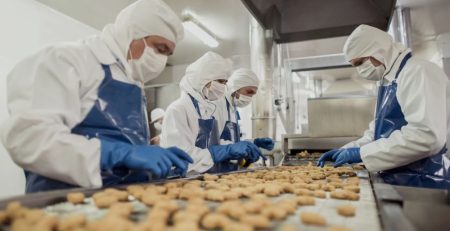
The shorter the supply chain, the easier it is to execute quality control. As a “guarantor” for investors, TJP ensures that quality standards are maintained from the field to the warehouse. We implement rigorous monitoring systems to ensure local products are not just competitive, but superior to international standards.


Paving the Way for Local Producers: Justice in Every Field

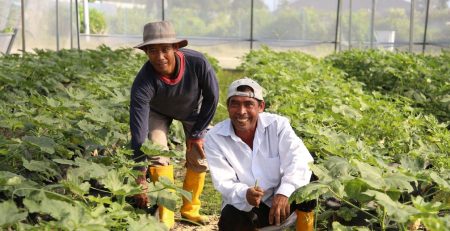
For us at TJP, business success must not leave behind the food heroes on the front lines. Local farmers and ranchers are often marginalized because they lack direct access to modern or international markets. They frequently find themselves trapped in non-transparent middleman systems.

This is where TJP acts as a “pathmaker.” We embrace local producers, bringing them into the Terindo Group ecosystem. The support we provide includes:

  • Market Certainty: We provide guaranteed absorption of harvests at fair and competitive prices.
  • Standardization Mentorship: We assist farmers in elevating their product quality to meet high-end market expectations, thereby increasing their bargaining power.
  • Rural Economic Empowerment: By optimizing our function as a local distributor, we ensure that capital circulation remains within local communities, which in turn fosters social sustainability.

A Bridge to a Greener Future

Sourcing locally through PT. Tetra Jaya Plusindo and Terindo Group is a statement of vision. We are not merely moving goods from one point to another; we are building the future bridge for Indonesian agribusiness. A bridge that connects fertile land to the consumer’s table in the most responsible way possible.

For investors, TJP is the guarantor that your capital is working toward a sustainable future. For producers, TJP is the partner paving the way to broader prosperity. And for all of us, shortening the distance between farmer and consumer is a concrete step to ensure this planet remains habitable for generations to come.

Let us pivot to local sources. Let us build food sovereignty that is independent, efficient, and low-emission. Ultimately, the best climate solutions are often found in our own soil, not far from where we stand.

Share this post

Facebook LinkedIn Email WhatsApp

Related Posts

What is Business Bridging and Why is it Crucial for MSMEs? Transforming Supply Chains with PT. Tetra Jaya Plusindo

What is Business Bridging and Why is it Crucial for MSMEs? Transforming Supply Chains with PT. Tetra Jaya Plusindo

What is Business Bridging and Why is it Crucial for MSMEs? Transforming Supply Chains with PT. Tetra Jaya Plusindo In... read more

# **Bird’s Eye Chili: A Premier Commodity in Indonesia’s Supply Chain** In the landscape of Indonesian food commodities, a unique and recurring phenomenon has caught the serious attention of policymakers, market players, and households alike: the price dynamics of Bird’s Eye Chili. Consistently, the price of red Bird’s Eye Chili per kilogram often exceeds that of other basic staples, such as rice, sugar, or even poultry, during specific periods ### **Why Does This "Small" Commodity Command Such a High Price?** When compared head-to-head, the price of red Bird’s Eye Chili often reaches figures far above the average price of premium rice or shallots**Bird’s Eye Chili**. Several factors contribute to this high valuation: - **Significant Production Risks**: Unlike more resilient food crops, Bird’s Eye Chili is highly vulnerable to weather anomalies and pest infestations. A harvest failure in a single season can drastically slash national supply in a short time. - **Perishability**: Its short shelf life demands highly efficient logistical management. Every hour of delay in distribution results in a decline in quality and market value. - **Inelastic Demand**: In Indonesia, Bird’s Eye Chili is more than just a garnish; it is a cultural necessity. High demand, when not met with supply stability, creates extreme price volatility. ### **The Role of PT Tetra Jaya Plusindo: Bridging the Gap Between Upstream and Downstream** PT Tetra Jaya Plusindo understands that to keep Bird’s Eye Chili prices competitive for consumers while remaining profitable for farmers, a smarter and more transparent supply chain system is required As a pathfinder for producers—especially chili farmers across various regions—we are committed to ensuring their products are fairly valued and meet quality standards capable of penetrating wider markets. 1. **Standardization and Quality Control**: We assist farmers in implementing strict Quality Control protocols from planting to post-harvest. Maintaining quality ensures the produced Bird’s Eye Chili has higher competitiveness among large retailers and the food processing industry. This minimizes harvest waste caused by products failing to meet market specifications. 2. **Logistical and Supply Chain Efficiency**: PT Tetra Jaya Plusindo acts as an integrator that eliminates supply chain inefficiencies. Through shorter and more organized distribution channels, we ensure product freshness is maintained while logistical costs are reduced. ### **Investor Perspective: Ensuring "On Track" Investments** For investors and landowners, food commodities like Bird’s Eye Chili offer stable growth prospects alongside increasing population and consumption. However, investing in this sector requires an entity that understands field-level risk mitigation. We believe secure investments are those that provide a real impact on food security and producer welfare. By utilizing accurate market data and extensive networks, we help business partners make decisions based on in-depth analysis rather than mere price speculation. By making Bird’s Eye Chili a focus commodity, we aim to help society thrive together, creating efficiency while preserving natural resources for future generations. Let us build a supply chain that is not only financially profitable but also socially impactful. Whether you own idle land or wish to enter agribusiness without owning land, [consult with us today.](http://wa.me/6281517748865)

Bird’s Eye Chili: A Premier Commodity in Indonesia’s Supply Chain

Bird’s Eye Chili: A Premier Commodity in Indonesia’s Supply Chain In the landscape of Indonesian food commodities, a unique and... read more

A Guide to Farmer-Corporate Partnerships: Cultivating Mutual Success in a Sustainable Ecosystem

A Guide to Farmer-Corporate Partnerships: Cultivating Mutual Success in a Sustainable Ecosystem

A Guide to Farmer-Corporate Partnerships: Cultivating Mutual Success in a Sustainable Ecosystem In the face of an increasingly volatile global... read more

Transforming Unused Land: Securing Food Security and Strategic Investment Opportunities for 2026

Transforming Unused Land: Securing Food Security and Strategic Investment Opportunities for 2026

Transforming Unused Land: Securing Food Security and Strategic Investment Opportunities for 2026 As we move toward 2026, the global economic... read more

Activating Unused Land Potential through Agribusiness Partnerships: A Strategic Solution to the National Land Crisis

Activating Unused Land Potential through Agribusiness Partnerships: A Strategic Solution to the National Land Crisis

Activating Unused Land Potential through Agribusiness Partnerships: A Strategic Solution to the National Land Crisis Indonesia is historically recognized as... read more

Elevation and Competitive Advantage: Why Altitudes Determine the Success of Planting Commodities

Elevation and Competitive Advantage: Why Altitudes Determine the Success of Planting Commodities

Elevation and Competitive Advantage: Why Altitudes Determine the Success of Planting Commodities In an increasingly competitive global supply chain, food... read more

The Urgency of Quality Control and Standardization in Indonesian Agriculture

The Urgency of Quality Control and Standardization in Indonesian Agriculture

The Urgency of Quality Control and Standardization in Indonesian Agriculture In today’s global economic landscape, the agribusiness sector is no... read more

The Foundation of Sustainability: Optimizing Land Preparation for Food Supply Chain Excellence

The Foundation of Sustainability: Optimizing Land Preparation for Food Supply Chain Excellence

The Foundation of Sustainability: Optimizing Land Preparation for Food Supply Chain Excellence In the modern agribusiness ecosystem, final product quality... read more

Strategies for Building a Sustainable Business Network: A Modern Agribusiness Perspective

Strategies for Building a Sustainable Business Network: A Modern Agribusiness Perspective

Strategies for Building a Sustainable Business Network: A Modern Agribusiness Perspective In today’s global economic landscape, the paradigm of corporate... read more

Strategic Analysis: The Vitality of Daily Fruit and Vegetable Consumption in Global Health and Markets

Strategic Analysis: The Vitality of Daily Fruit and Vegetable Consumption in Global Health and Markets The consumption of fruits and... read more

Tags

agrobusiness fruit oystermushroom plant vegetable
Facebook Youtube Instagram Linkedin Tiktok
© copyright 2022. Tetra Jaya Plusindo