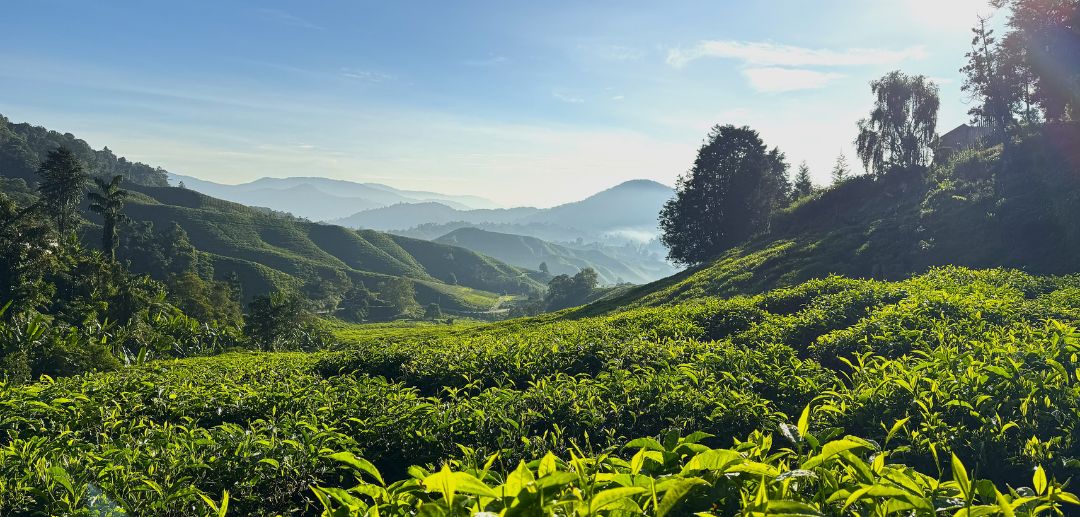
Elevation and Competitive Advantage: Why Altitudes Determine the Success of Planting Commodities
In an increasingly competitive global supply chain, food production efficiency is no longer solely determined by land area or mechanized technology. An absolute natural factor dictates the quality and sustainability of an agribusiness ecosystem: elevation above sea level (MASL)elevation above sea level (MASL). PT Tetra Jaya Plusindo views MASL as a key variable in investment risk management and quality assurance for end consumers.
The Science Behind Elevation
Fundamentally, every 100-meter increase in elevation results in an average temperature drop of 0,6 Celcius degree. For plants, temperature is a catalyst for photosynthesis and respiration. Every planting commodity has an optimal “sweet spot” temperature planting commodity. Forcing a crop designed for highlands into a coastal environment leads to physiological stress, reduced immunity to pests, and total harvest failure. Ensuring the right elevation for the right crop is our first step as an investment guarantor.
Junghuhn Zoning: A Strategic Selection Guide
We use Junghuhn’s climate classification as an intellectual reference for mapping supply potential:
- **Hot Zone (0 – 600 MASL)**Hot Zone (0 – 600 MASL): Home to planting commodities requiring high sunlight, such as rice, corn, sugarcane, coconut, and rubber planting commodities. Efficiency in cost per kilogram is vital here due to thin margins and massive global demand.
- **Moderate Zone (600 – 1,500 MASL)**Moderate Zone (600 – 1,500 MASL): Ideal for industrial crops like Robusta coffee, cocoa, tea, and tobacco. Here, quality begins to outweigh quantity, and distinct flavor profiles begin to take shape.
- **Cool Zone (1,500 – 2,500 MASL)**Cool Zone (1,500 – 2,500 MASL): The domain of high-value crops like premium Arabica coffee, export-quality tea, and highland vegetables. Consumers are willing to pay premium prices for these products due to concentrated nutrients and exclusive growth conditions.
- **Cold Zone (> 2,500 MASL)**Cold Zone (> 2,500 MASL): Generally unsuitable for commercial farming but vital for conservation and water resource protection.
Why Elevation Matters to Investors and Producers
We use MASL data to ensure supply-demand accuracy. For instance, if a market requires coffee with bright acidity, we partner with producers above 1,200 MASL; planting Arabica at 400 MASL results in hollow flavor and pest vulnerability. Mismatched planting locations can result in operational inefficiencies of up to 30%30%.
We provide the guidance necessary for producers in lowlands to maximize efficiency and for highland producers to perfect high-value niche products. Furthermore, optimizing planting commodities according to MASL on designated agricultural land is an act of conservation planting commodities. It reduces chemical input requirements and allows crops to grow in harmony with nature. Let us synchronize geographic data with global market needs to ensure Indonesian products are world-class. Let’s consult with us, contact PT Tetra Jaya Plusindo now!