The Urgency of Quality Control and Standardization in Indonesian Agriculture
In today’s global economic landscape, the agribusiness sector is no longer merely about production capacity or land mass. In the international arena, “quality” is a currency far more valuable than mere quantity. While Indonesian agricultural products possess extraordinary potential, without rigorous quality control protocols, this potential often hits a wall of precise and demanding global regulations.
PT. Tetra Jaya Plusindo serves as a “strategic bridge.” We recognize that connecting local producers to export markets requires a quality assurance system that transcends mere formality—it must become the bedrock of trust for investors and a guarantee of sustainability for our farmers.
Why Quality Control is the Key to Investment Risk Mitigation
For capital owners and market stakeholders, the greatest risk in agribusiness is product rejection at the port of destination. Data indicates that thousands of tons of global agricultural commodities are rejected annually due to failure to meet standards for pesticide residues, microbial contamination, or physical defects.
The integrated quality control process at PT. Tetra Jaya Plusindo is engineered to transform this risk into certainty. Through systematic quality management, we are not just preserving a product; we are protecting the value of the investment. International quality standards function as a “passport,” allowing local products to cross international borders seamlessly.
Decoding International Quality Standards: ISO, HACCP, and SNI
To compete at a world-class level, our products must speak the universal language of standardization. PT. Tetra Jaya Plusindo ensures every product within our ecosystem aligns with or exceeds the following criteria:
1. ISO (International Organization for Standardization)
ISO certifications, particularly the 9001 series for quality management and ISO 22000 for food safety, represent global recognition of an entity’s management system. For investors, ISO certification is evidence that the company operates under consistent, measurable, and professional Standard Operating Procedures (SOPs).
2. HACCP (Hazard Analysis and Critical Control Point)
This is a preventive system focused on food safety. HACCP identifies critical points where physical, chemical, or biological contamination could occur—from the farm to the packaging facility. By implementing HACCP, we provide global consumers with the ultimate assurance that the product is safe for consumption.
3. SNI (Indonesian National Standard)
As products of national pride, meeting SNI is the first essential step. SNI ensures that products possess a quality identity recognized nationally before we leap onto the international stage. It serves as the foundation for producers to begin adopting a culture of standardization.
The Quality Control Process within the PT. Tetra Jaya Plusindo Ecosystem
We do not apply quality control solely at the end of the line. At PT. Tetra Jaya Plusindo, QC is a continuous journey involving the dedication of producers and the oversight of experts.
| Phase | Core Activities | Market Impact |
|---|---|---|
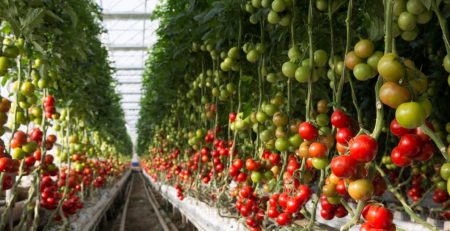
| Pre-Harvest | Soil analysis, premium seed selection, and controlled organic/chemical input. | Minimizes pesticide residues and guarantees varietal purity. |
| Harvesting | Precision timing and correct harvesting techniques. | Preserves product freshness and textures demanded by premium markets. |
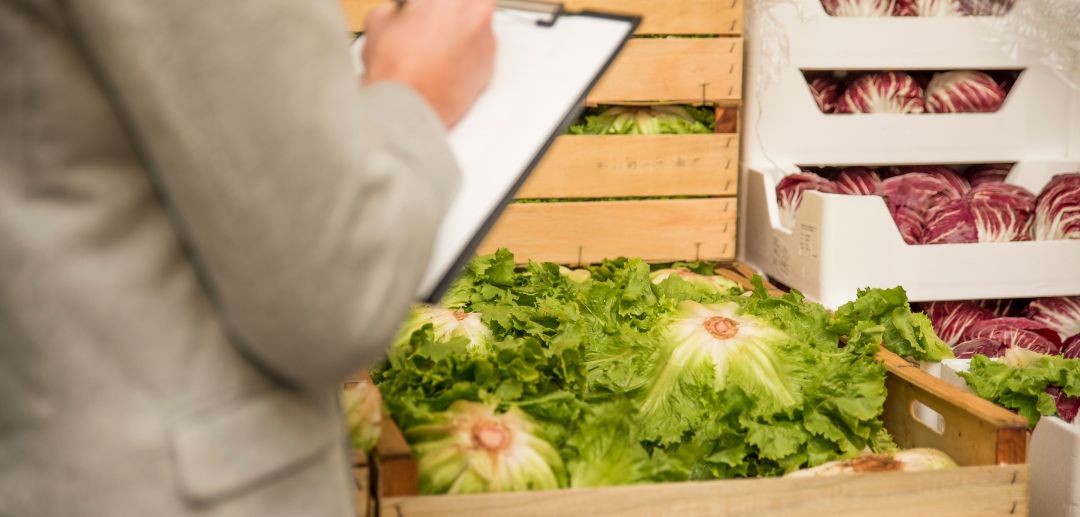
| Post-Harvest | Sorting (Grading), cleaning, and temperature-controlled drying. | Product uniformity (size, color, weight) tailored to buyer specifications. |
| Packaging | Use of export-grade materials designed for optimal air circulation. | Extends shelf life during complex global logistical transit. |
Empowering Producers: QC as an Escalator to Prosperity, Not a Burden
To our partner producers—the farmers and ranchers—we wish to emphasize that quality control is not an obstacle designed to complicate your hard work. On the contrary, QC is a “pathmaker.” Products that adhere to high-quality standards command premium prices in international markets.
Without quality standards, your harvest is often undervalued by middlemen due to uncertainty. However, with PT. Tetra Jaya Plusindo, every drop of sweat spent maintaining quality is rewarded with access to broader markets and more stable contracts. We are here to provide the mentorship, education, and support necessary to ensure that international standards can be applied in a way that is approachable and practical in the field.
Economic Impact: Data-Driven Analysis of Quality-Based Returns
Let us examine the comparative economic value between standard agricultural products without rigorous control and those that undergo professional quality control:
- Products Without Stringent QC: These often face sharp domestic price fluctuations. Post-harvest loss risks can reach 30-40%. Profit margins tend to stagnate as they rely on saturated local markets.
- Products with QC (Export Standard): These enjoy access to more stable global pricing. Market rejection risks drop to below 2%. The selling value of the product can increase by 200% to 500%, depending on the commodity and the target destination (such as Japan, the European Union, or the Middle East).
For investors, these figures demonstrate that allocating resources to a quality assurance system is not an “operating expense,” but rather a strategic investment that yields significantly higher returns.
The Role of PT. Tetra Jaya Plusindo as a Quality Guarantor
As a “guarantor” for investors, we conduct periodic audits of our entire supply chain. We ensure that the data reported from the field is accurate and verifiable. Through this transparency, market owners can commit to long-term partnerships without hesitation.
We believe that transparency is the new currency in global agribusiness. Through monitoring technology and rigorous oversight, PT. Tetra Jaya Plusindo ensures that every product leaving our ecosystem carries the good name of Indonesia and meets the expectations of the most discerning customers worldwide.
Conclusion: Collaborating for the Future of Food
The future of Indonesian agriculture does not lie in how much we can plant, but in how well we can preserve and standardize what we produce. Quality control is the ultimate differentiator between a common commodity and a high-value product.
PT. Tetra Jaya Plusindo invites investors to join a secure, measurable, and data-driven ecosystem. Simultaneously, we invite producers to walk with us toward a global standardization that fosters prosperity. Together, we are building a sturdy bridge—where quality is the foundation, and shared prosperity is the destination.
Let us show the world that from the skilled hands of Indonesian farmers and the professional management of PT. Tetra Jaya Plusindo, world-class agribusiness products are born: safe, healthy, and highly profitable.





](https://tetrajayaplusindo.co.id/storage/2026/05/Template-Article-Tetra-4-1-450x231.jpg)