Tetra Jaya Plusindo
  • Home
  • Who We Are
  • Our Business
  • Products
  • Cooperate With Us
  • Our Team
  • News
  • Contact Us
  • enEnglish
    • idBahasa Indonesia
  • Home
  • Who We Are
  • Our Business
  • Products
  • Cooperate With Us
  • Our Team
  • News
  • Contact Us
  • enEnglish
    • idBahasa Indonesia
Establishing the Gold Standard of Food: Understanding GMP (Good Manufacturing Practice) and Its Urgency in the Agribusiness Ecosystem
tetra2026-05-23T10:06:36+00:00

Establishing the Gold Standard of Food: Understanding GMP (Good Manufacturing Practice) and Its Urgency in the Agribusiness Ecosystem

In the increasingly competitive global food industry, quality is no longer merely a promise on paper; it is a verifiable protocol. One of the most crucial instruments serving as a parameter of trust between producers, investors, and consumers is Good Manufacturing Practice (GMP).

PT. Tetra Jaya Plusindo (TJP) stands as a “strategic bridge,” recognizing that without robust operational standards at the upstream and midstream levels, Indonesia’s agribusiness potential will struggle to penetrate strict international markets. As a “guarantor” for investors and a “pathmaker” for producers, we view GMP not as a bureaucratic burden, but as a strategic investment to ensure business sustainability and food safety.


What is Good Manufacturing Practice (GMP)?

Intellectually defined, Good Manufacturing Practice is a system designed to ensure that products are consistently produced and controlled according to rigorous quality standards.

GMP covers every aspect of production, from raw materials and production premises to staff training. Its primary objective is to minimize the risks involved in food production that cannot be eliminated through final product testing alone—such as cross-contamination, mislabeling, or microbial adulteration.


The Scope of GMP: A Foundation for Holistic Quality

For market owners and investors, understanding the scope of GMP is vital for mapping the operational health of a business unit. GMP does not only concern the final result; it focuses on “how” the process is executed. The following are the core pillars within the scope of GMP:

1. Facility and Building Design

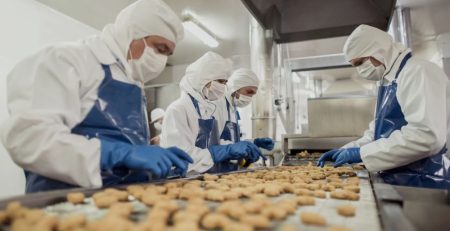
Production premises must have a layout that prevents cross-contamination. The production flow should be unidirectional—from raw material reception to final packaging. Floors, walls, and ceilings must be easy to clean and resistant to fungal growth.

2. Personnel Hygiene

Humans are the largest variable in food production. GMP standards require routine training for employees regarding personal hygiene, the use of appropriate Personal Protective Equipment (PPE), and strict hand-washing protocols.

3. Equipment Maintenance and Sanitation

All equipment in direct contact with food must be made of non-corrosive materials (such as 304/316 stainless steel) and designed for easy disassembly to facilitate routine sanitation.

4. Operational Process Control

Every stage of production must have a clear Standard Operating Procedure (SOP). This includes storage temperatures, processing durations, and waste management to ensure the surrounding environment remains uncontaminated.


Why GMP Matters to Investors and Market Owners: A Data & Risk Perspective

For investors, agribusiness is often perceived as having a high-risk profile. However, through the implementation of Good Manufacturing Practice, these risks can be quantified and mitigated.

  • Mitigating Recall Risks: Industrial data indicates that 60–70% of product recalls in the global market are caused by sanitation system failures and cross-contamination—issues that are entirely preventable through GMP.
  • Cost Efficiency: While initial implementation requires capital, GMP reduces long-term costs by eliminating raw material waste and minimizing “reject” or failed products.
  • International Market Access: In 2026, modern retailers and importers in the European Union, the United States, and East Asia require GMP certification as an absolute prerequisite. Without it, a product remains confined to local markets with limited margins.

PT. Tetra Jaya Plusindo acts as the “guarantor” of this integrity. We ensure that every production unit within our ecosystem complies with GMP protocols, ensuring your capital is working within entities that maintain world-class safety standards.


Initial Steps for Producers to Meet GMP Standards

To our fellow producers—farmers, ranchers, and food SME owners—we understand that the term Good Manufacturing Practice may sound intimidating. However, PT. Tetra Jaya Plusindo is here as a “pathmaker” to guide you through these practical steps:

  1. Gap Analysis: Evaluate your current facility conditions against GMP standards. Identify the most critical areas for improvement, such as drainage systems or hand-washing stations.
  2. SOP Documentation: Begin recording every process. Documentation is key. In the world of auditing, if a process is not recorded, it is considered to have never happened.
  3. Employee Training: Start with small habits. Educate your team on the importance of cleanliness and discipline within the production area. A culture of quality begins with people.
  4. Sanitation Commitment: Establish a strict daily and weekly cleaning schedule for all production areas and equipment.

At TJP, we provide the technical mentorship and education necessary so that you do not feel you are walking this path toward international standardization alone.


The Strategic Role of PT. Tetra Jaya Plusindo as Bridge & Guarantor

TJP stands between the idealism of global standards and the reality of local producers. We do not merely demand that producers meet GMP; we build the bridge that enables them to achieve it.

  • For Producers: We provide access to the knowledge and technology required for standardization. We help your products “level up,” giving them significantly higher bargaining power.
  • For Investors: We provide operational transparency reports. When you invest through TJP, you are investing in a supply chain with verified safety protocols.

Quality is a Universal Language

Good Manufacturing Practice is not just about cleanliness; it is about business integrity. At PT. Tetra Jaya Plusindo, we believe that food produced in a “good way” results in a “good business.”

We invite market owners and investors to join our secure, standardized ecosystem. Likewise, for our producers, let us step forward together toward a higher level of professionalism in the food industry. Together with PT. Tetra Jaya Plusindo, we will prove that Indonesian products are capable of meeting the world’s gold standards, preserving quality from the field to the consumer’s table.

Share this post

Facebook LinkedIn Email WhatsApp

Related Posts

Sourcing Locally with Terindo Group: Shortening Distances, Optimizing Value, and Securing the Future

Sourcing Locally with Terindo Group: Shortening Distances, Optimizing Value, and Securing the Future

Sourcing Locally with Terindo Group: Shortening Distances, Optimizing Value, and Securing the Future Have we ever paused to consider the... read more

Strategic Analysis: The Vitality of Daily Fruit and Vegetable Consumption in Global Health and Markets

Strategic Analysis: The Vitality of Daily Fruit and Vegetable Consumption in Global Health and Markets The consumption of fruits and... read more

The Urgency of Quality Control and Standardization in Indonesian Agriculture

The Urgency of Quality Control and Standardization in Indonesian Agriculture

The Urgency of Quality Control and Standardization in Indonesian Agriculture In today’s global economic landscape, the agribusiness sector is no... read more

Strategies for Building a Sustainable Business Network: A Modern Agribusiness Perspective

Strategies for Building a Sustainable Business Network: A Modern Agribusiness Perspective

Strategies for Building a Sustainable Business Network: A Modern Agribusiness Perspective In today’s global economic landscape, the paradigm of corporate... read more

The Foundation of Sustainability: Optimizing Land Preparation for Food Supply Chain Excellence

The Foundation of Sustainability: Optimizing Land Preparation for Food Supply Chain Excellence

The Foundation of Sustainability: Optimizing Land Preparation for Food Supply Chain Excellence In the modern agribusiness ecosystem, final product quality... read more

Animal Protein Sources in Broiler Chicken: Strategic Insights into Nutritional Value and Health Benefits

Animal Protein Sources in Broiler Chicken: Strategic Insights into Nutritional Value and Health Benefits

Animal Protein Sources in Broiler Chicken: Strategic Insights into Nutritional Value and Health Benefits Animal protein derived from broiler chickens... read more

A Guide to Farmer-Corporate Partnerships: Cultivating Mutual Success in a Sustainable Ecosystem

A Guide to Farmer-Corporate Partnerships: Cultivating Mutual Success in a Sustainable Ecosystem

A Guide to Farmer-Corporate Partnerships: Cultivating Mutual Success in a Sustainable Ecosystem In the face of an increasingly volatile global... read more

# **Bird’s Eye Chili: A Premier Commodity in Indonesia’s Supply Chain** In the landscape of Indonesian food commodities, a unique and recurring phenomenon has caught the serious attention of policymakers, market players, and households alike: the price dynamics of Bird’s Eye Chili. Consistently, the price of red Bird’s Eye Chili per kilogram often exceeds that of other basic staples, such as rice, sugar, or even poultry, during specific periods ### **Why Does This "Small" Commodity Command Such a High Price?** When compared head-to-head, the price of red Bird’s Eye Chili often reaches figures far above the average price of premium rice or shallots**Bird’s Eye Chili**. Several factors contribute to this high valuation: - **Significant Production Risks**: Unlike more resilient food crops, Bird’s Eye Chili is highly vulnerable to weather anomalies and pest infestations. A harvest failure in a single season can drastically slash national supply in a short time. - **Perishability**: Its short shelf life demands highly efficient logistical management. Every hour of delay in distribution results in a decline in quality and market value. - **Inelastic Demand**: In Indonesia, Bird’s Eye Chili is more than just a garnish; it is a cultural necessity. High demand, when not met with supply stability, creates extreme price volatility. ### **The Role of PT Tetra Jaya Plusindo: Bridging the Gap Between Upstream and Downstream** PT Tetra Jaya Plusindo understands that to keep Bird’s Eye Chili prices competitive for consumers while remaining profitable for farmers, a smarter and more transparent supply chain system is required As a pathfinder for producers—especially chili farmers across various regions—we are committed to ensuring their products are fairly valued and meet quality standards capable of penetrating wider markets. 1. **Standardization and Quality Control**: We assist farmers in implementing strict Quality Control protocols from planting to post-harvest. Maintaining quality ensures the produced Bird’s Eye Chili has higher competitiveness among large retailers and the food processing industry. This minimizes harvest waste caused by products failing to meet market specifications. 2. **Logistical and Supply Chain Efficiency**: PT Tetra Jaya Plusindo acts as an integrator that eliminates supply chain inefficiencies. Through shorter and more organized distribution channels, we ensure product freshness is maintained while logistical costs are reduced. ### **Investor Perspective: Ensuring "On Track" Investments** For investors and landowners, food commodities like Bird’s Eye Chili offer stable growth prospects alongside increasing population and consumption. However, investing in this sector requires an entity that understands field-level risk mitigation. We believe secure investments are those that provide a real impact on food security and producer welfare. By utilizing accurate market data and extensive networks, we help business partners make decisions based on in-depth analysis rather than mere price speculation. By making Bird’s Eye Chili a focus commodity, we aim to help society thrive together, creating efficiency while preserving natural resources for future generations. Let us build a supply chain that is not only financially profitable but also socially impactful. Whether you own idle land or wish to enter agribusiness without owning land, [consult with us today.](http://wa.me/6281517748865)

Bird’s Eye Chili: A Premier Commodity in Indonesia’s Supply Chain

Bird’s Eye Chili: A Premier Commodity in Indonesia’s Supply Chain In the landscape of Indonesian food commodities, a unique and... read more

Transforming Unused Land: Securing Food Security and Strategic Investment Opportunities for 2026

Transforming Unused Land: Securing Food Security and Strategic Investment Opportunities for 2026

Transforming Unused Land: Securing Food Security and Strategic Investment Opportunities for 2026 As we move toward 2026, the global economic... read more

Preserving Integrity from Farm to Fork: The Essential Process of Agricultural Quality Control

Preserving Integrity from Farm to Fork: The Essential Process of Agricultural Quality Control

Preserving Integrity from Farm to Fork: The Essential Process of Agricultural Quality Control In the global market dynamics of 2026,... read more

Tags

agrobusiness fruit oystermushroom plant vegetable
Facebook Youtube Instagram Linkedin Tiktok
© copyright 2022. Tetra Jaya Plusindo