Tetra Jaya Plusindo
  • Home
  • Who We Are
  • Our Business
  • Products
  • Cooperate With Us
  • Our Team
  • News
  • Contact Us
  • enEnglish
    • idBahasa Indonesia
  • Home
  • Who We Are
  • Our Business
  • Products
  • Cooperate With Us
  • Our Team
  • News
  • Contact Us
  • enEnglish
    • idBahasa Indonesia
Navigating the Food Business Chain: Understanding the Strategic Roles of Farmers, Producers, and Distributors
tetra2026-09-02T07:56:36+00:00

Navigating the Food Business Chain: Understanding the Strategic Roles of Farmers, Producers, and Distributors

In today’s global economic discourse, food security has transitioned from a purely social concern to a pillar of national stability and a massive investment frontier. However, for many stakeholders—ranging from potential investors to emerging entrepreneurs—the terminology within the food business chain often appears to overlap. This lack of clarity regarding the specific roles of farmers, producers, and distributors frequently creates systemic inefficiencies that disadvantage all parties involved.

PT. Tetra Jaya Plusindo stands as a “strategic bridge” committed to unraveling these complexities. With a vision to build a sustainable ecosystem, we serve as a guarantor for investors and a pathmaker for those at the upstream. This article dissects the distinct roles of these three primary actors, enabling every stakeholder to map their strategic position in pursuit of inclusive growth.


1. The Farmer: The Root of All Production (Upstream)

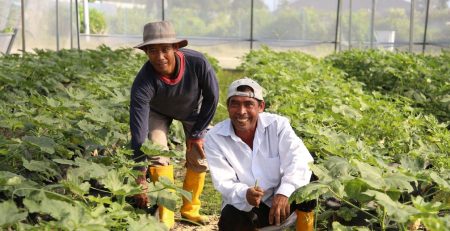
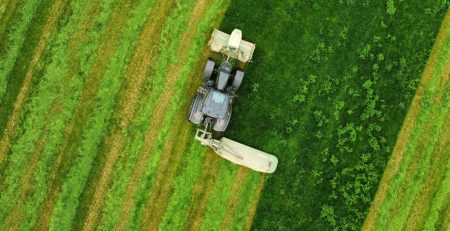
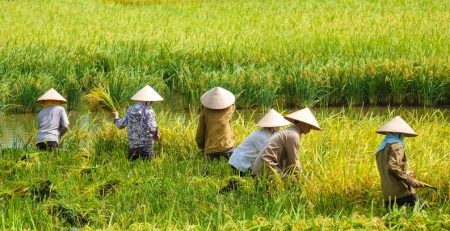
Farmers and ranchers are the most fundamental, and arguably the most crucial, pillars of the industry. In the terminology of the food business chain, the farmer acts as the primary commodity provider. Their core responsibility is the management of natural resources—land, water, and seeds—to produce raw agricultural yields.

  • Characteristics: Focused on cultivation, land management, and biological maintenance.
  • Challenges: Vulnerability to climate change, raw commodity price fluctuations, and limited access to capital.
  • Strategic Position: Without maintained harvest quality at the farm level, the entire chain above it inevitably falters.

PT. Tetra Jaya Plusindo views farmers not merely as laborers, but as strategic partners. We act as a “Pathmaker” by providing technical mentorship and access to technology, ensuring their harvests meet the quality standards of a broader market.

2. The Producer: The Architect of Value-Add (Midstream)

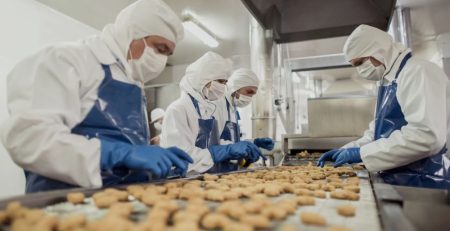
Farmers are often conflated with producers, yet from an intellectual business perspective, they perform different functions. A producer is an entity focused on “downstreaming” or transformation. They take raw materials from farmers and process them into semi-finished or finished goods ready for consumption.

  • Characteristics: Equipped with processing facilities (factories/mills), focused on quality standardization (ISO, HACCP), and professional packaging.
  • Challenges: Operational cost efficiency, consistent quality standards, and supply chain certainty for raw materials.
  • Strategic Position: Producers create “value-add.” For instance, while raw grain from a farmer has a base economic value of $X$, once processed into premium vacuum-packed rice by a producer, its value can reach $X + 50\%$.

This is where PT. Tetra Jaya Plusindo steps in as a “Guarantor.” We ensure that producers within our ecosystem receive a stable supply of raw materials, providing investors who fund production units with operational certainty.

3. The Distributor: The Bridge to the Consumer’s Table (Downstream)

The distributor is the actor responsible for logistics and market penetration. They neither plant nor process; rather, they manage distribution networks, warehouses, and transportation fleets.

  • Characteristics: Focused on inventory management, cold chain integrity, and relationships with retailers or market owners.
  • Challenges: Logistical inefficiencies (particularly in an archipelagic nation like Indonesia), product damage during transit, and fluctuating transportation costs.
  • Strategic Position: The distributor ensures “availability.” Even the finest product from a producer holds no value if it does not reach the consumer’s hands on time.

Comparative Roles in the Food Business Chain

To assist investors and market owners in data analysis, the following table illustrates these comparative roles:

FeatureFarmer / RancherProducer (Processor)Distributor
Key InputSeeds, Land, WaterRaw Materials from FarmersFinished Products from Producers
Key OutputPrimary CommoditiesValue-Added ProductsMarket Accessibility
Primary RiskWeather & PestsMachinery & QC StandardsLogistics & Price Depletion
Profit ScaleVolume per HarvestValue-Add MarginDistribution Volume
PT. TJP’s RolePathmaker & EducatorSupply & Quality GuarantorStrategic Bridge

Why This Differentiation Matters for Investors

For market owners and investors, understanding these distinctions is the key to risk mitigation. Agribusiness investment is often perceived as high-risk due to an inability to identify exactly where inefficiencies occur.

Data suggests that in Indonesia, the highest “food loss” or value depletion occurs during the distribution and post-harvest phases due to a lack of coordination between these three actors. PT. Tetra Jaya Plusindo bridges these gaps. We provide data transparency:

  1. To Investors: We guarantee that your capital is working within the most efficient chain, with risks diversified between upstream and downstream.
  2. To Producers: We provide certainty that your products will be absorbed by a vast distribution network while maintaining peak quality.

Sustainable Ecosystem Synergy with PT. Tetra Jaya Plusindo

Our vision at PT. Tetra Jaya Plusindo is to create a food business chain that is not only financially profitable but also socially and environmentally sustainable. We believe that prosperous farmers produce quality goods, efficient producers create economic value, and reliable distributors ensure that healthy food reaches every corner of the globe.

We position ourselves as the “intellectual hub” of this chain. Through monitoring technology and rigorous risk management, we ensure that:

  • Farmers receive fair trade pricing.
  • Producers receive measurable and consistent supplies.
  • Investors receive accurate, transparent growth reports.

Conclusion: Where is Your Position?

Recognizing whether you are a farmer, a producer, or a distributor is the first step toward agricultural professionalism. However, the more vital realization is that no single actor can stand alone. Synergy is the only path to long-term profitability.

PT. Tetra Jaya Plusindo invites you to join this ecosystem—whether you are a landowner seeking to elevate production quality, a processor looking for supply certainty, or an investor seeking fundamental real assets.

Let us build an Indonesian food business chain that is stronger, smarter, and rooted in integrity. Together with PT. Tetra Jaya Plusindo, we will transform the potential of our soil into a global economic force. Let’s consult with us, contact PT Tetra Jaya Plusindo now!

Share this post

Facebook LinkedIn Email WhatsApp

Related Posts

Agripreneurship: Transforming the Face of Indonesian Agriculture into Global Innovative Business Opportunities

Agripreneurship: Transforming the Face of Indonesian Agriculture into Global Innovative Business Opportunities

Agripreneurship: Transforming the Face of Indonesian Agriculture into Global Innovative Business Opportunities For decades, the agricultural sector in Indonesia has... read more

Building a Sustainable Ecosystem: A Comprehensive Checklist for Selecting an Honest and Professional Business Partner

Building a Sustainable Ecosystem: A Comprehensive Checklist for Selecting an Honest and Professional Business Partner

Building a Sustainable Ecosystem: A Comprehensive Checklist for Selecting an Honest and Professional Business Partner In a fast-paced global economic... read more

Activating Unused Land Potential through Agribusiness Partnerships: A Strategic Solution to the National Land Crisis

Activating Unused Land Potential through Agribusiness Partnerships: A Strategic Solution to the National Land Crisis

Activating Unused Land Potential through Agribusiness Partnerships: A Strategic Solution to the National Land Crisis Indonesia is historically recognized as... read more

Understanding Profitable Agribusiness Models in Indonesia: The Strategic Synergy of PT. Tetra Jaya Plusindo

Understanding Profitable Agribusiness Models in Indonesia: The Strategic Synergy of PT. Tetra Jaya Plusindo

Understanding Profitable Agribusiness Models in Indonesia: The Strategic Synergy of PT. Tetra Jaya Plusindo Indonesia is often labeled an agrarian... read more

Green Economy: A Profitable and Sustainable Future for Indonesian Agriculture

Green Economy: A Profitable and Sustainable Future for Indonesian Agriculture

Green Economy: A Profitable and Sustainable Future for Indonesian Agriculture Amidst the currents of globalization and the increasingly tangible challenges... read more

Panduan Strategis Memahami Label dan Standar Mutu Produk Pertanian

A Strategic Guide to Understanding Labels and Quality Standards in Agriculture

A Strategic Guide to Understanding Labels and Quality Standards in Agriculture In an increasingly integrated global trade ecosystem, agricultural products... read more

Assessing the Power of the Global Food Barn: Why Indonesia’s Food Industry Potential is the Future of the Global Supply Chain

Assessing the Power of the Global Food Barn: Why Indonesia’s Food Industry Potential is the Future of the Global Supply Chain

read more

Animal Protein Sources in Broiler Chicken: Strategic Insights into Nutritional Value and Health Benefits

Animal Protein Sources in Broiler Chicken: Strategic Insights into Nutritional Value and Health Benefits

Animal Protein Sources in Broiler Chicken: Strategic Insights into Nutritional Value and Health Benefits Animal protein derived from broiler chickens... read more

Strategic Analysis: The Vitality of Daily Fruit and Vegetable Consumption in Global Health and Markets

Strategic Analysis: The Vitality of Daily Fruit and Vegetable Consumption in Global Health and Markets The consumption of fruits and... read more

# **Bird’s Eye Chili: A Premier Commodity in Indonesia’s Supply Chain** In the landscape of Indonesian food commodities, a unique and recurring phenomenon has caught the serious attention of policymakers, market players, and households alike: the price dynamics of Bird’s Eye Chili. Consistently, the price of red Bird’s Eye Chili per kilogram often exceeds that of other basic staples, such as rice, sugar, or even poultry, during specific periods ### **Why Does This "Small" Commodity Command Such a High Price?** When compared head-to-head, the price of red Bird’s Eye Chili often reaches figures far above the average price of premium rice or shallots**Bird’s Eye Chili**. Several factors contribute to this high valuation: - **Significant Production Risks**: Unlike more resilient food crops, Bird’s Eye Chili is highly vulnerable to weather anomalies and pest infestations. A harvest failure in a single season can drastically slash national supply in a short time. - **Perishability**: Its short shelf life demands highly efficient logistical management. Every hour of delay in distribution results in a decline in quality and market value. - **Inelastic Demand**: In Indonesia, Bird’s Eye Chili is more than just a garnish; it is a cultural necessity. High demand, when not met with supply stability, creates extreme price volatility. ### **The Role of PT Tetra Jaya Plusindo: Bridging the Gap Between Upstream and Downstream** PT Tetra Jaya Plusindo understands that to keep Bird’s Eye Chili prices competitive for consumers while remaining profitable for farmers, a smarter and more transparent supply chain system is required As a pathfinder for producers—especially chili farmers across various regions—we are committed to ensuring their products are fairly valued and meet quality standards capable of penetrating wider markets. 1. **Standardization and Quality Control**: We assist farmers in implementing strict Quality Control protocols from planting to post-harvest. Maintaining quality ensures the produced Bird’s Eye Chili has higher competitiveness among large retailers and the food processing industry. This minimizes harvest waste caused by products failing to meet market specifications. 2. **Logistical and Supply Chain Efficiency**: PT Tetra Jaya Plusindo acts as an integrator that eliminates supply chain inefficiencies. Through shorter and more organized distribution channels, we ensure product freshness is maintained while logistical costs are reduced. ### **Investor Perspective: Ensuring "On Track" Investments** For investors and landowners, food commodities like Bird’s Eye Chili offer stable growth prospects alongside increasing population and consumption. However, investing in this sector requires an entity that understands field-level risk mitigation. We believe secure investments are those that provide a real impact on food security and producer welfare. By utilizing accurate market data and extensive networks, we help business partners make decisions based on in-depth analysis rather than mere price speculation. By making Bird’s Eye Chili a focus commodity, we aim to help society thrive together, creating efficiency while preserving natural resources for future generations. Let us build a supply chain that is not only financially profitable but also socially impactful. Whether you own idle land or wish to enter agribusiness without owning land, [consult with us today.](http://wa.me/6281517748865)

Bird’s Eye Chili: A Premier Commodity in Indonesia’s Supply Chain

Bird’s Eye Chili: A Premier Commodity in Indonesia’s Supply Chain In the landscape of Indonesian food commodities, a unique and... read more

Tags

agrobusiness fruit oystermushroom plant vegetable
Facebook Youtube Instagram Linkedin Tiktok
© copyright 2022. Tetra Jaya Plusindo