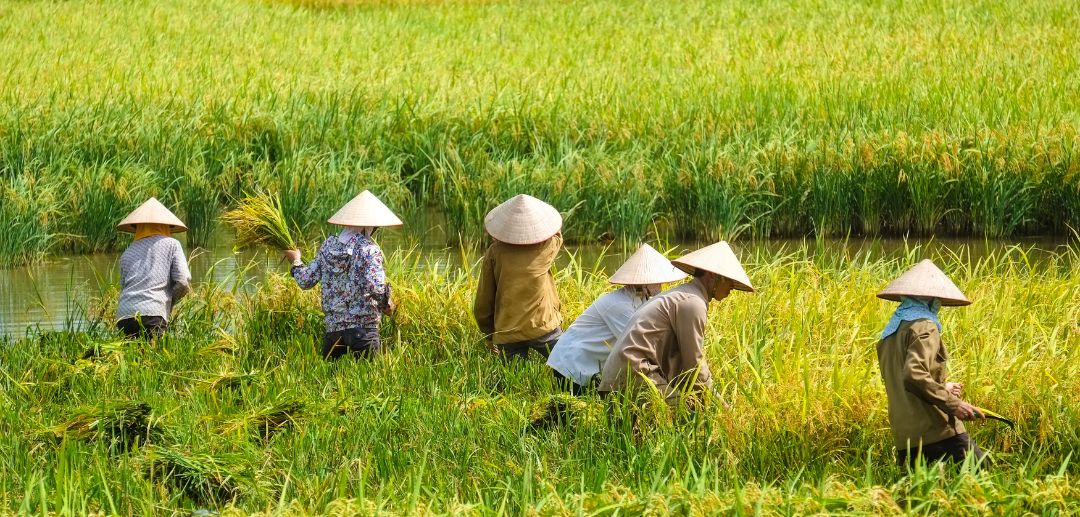
In the global agribusiness landscape of 2026, the greatest challenge facing small-scale producers in Indonesia is not a lack of dedication, but rather fragmentation. Our farmers and ranchers often stand alone, facing volatile market prices and stringent international quality standards without adequate protection. This is where the farmer cooperative (koperasi tani) emerges—not merely as a social organization, but as a transformative economic engine.
PT. Tetra Jaya Plusindo (TJP) recognizes that to build a truly sustainable supply chain, we must establish a rock-solid foundation at the upstream level. As a “strategic bridge,” TJP views farmer cooperatives as primary strategic partners that unify individual potential into a collective force ready to penetrate global markets.
Understanding the Farmer Cooperative: Beyond a Simple Association
Intellectually defined, a farmer cooperative is a member-based business entity owned and controlled by farmers to meet shared economic, social, and cultural needs. In a modern context, the cooperative acts as a “center of excellence” that aggregates harvests, standardizes quality, and strengthens bargaining power before large-scale buyers.
For PT. Tetra Jaya Plusindo, the presence of cooperatives facilitates our function as a “guarantor” for investors. Investors require certainty regarding volume and quality—an objective that is difficult to achieve when dealing with thousands of farmers individually, but becomes entirely feasible through a single, professional cooperative management gateway.
Strategic Benefits of Joining a Farmer Cooperative
For our fellow producers—farmers and ranchers—joining a cooperative is a tactical move to “level up” from being mere land managers to becoming empowered agribusiness players. Key benefits include:
1. Economies of Scale
Through a cooperative, the procurement of production inputs—such as seeds, fertilizers, and agricultural machinery—can be done collectively. This automatically lowers operational costs for the individual. During the sale phase, large volumes allow the cooperative to negotiate fairer prices than a farmer could achieve independently when dealing with middlemen.
2. Access to Technology and Financing
A healthy cooperative possesses the legal standing to access bank credit or third-party investment. In its role as a “pathmaker,” PT. Tetra Jaya Plusindo can more easily distribute technological assistance—such as IoT sensors or modern irrigation systems—to organized groups within a cooperative framework.
3. Quality Standardization and Education
Global markets demand certifications and consistent quality. The cooperative acts as an internal quality controller. With mentorship from TJP, the cooperative ensures that every product leaving the hands of its members meets export standards, thereby minimizing the risk of market rejection.
Investor Analysis: Why Farmer Cooperatives Enhance Asset Security
For market owners and investors, the farmer cooperative is a vital risk mitigation instrument. Investing in conventional agriculture is often perceived as high-risk due to supply chain uncertainties. However, when cooperatives partner with PT. Tetra Jaya Plusindo, these risks can be quantified and professionally managed.
| Risk Parameter | Independent Farming (High Risk) | Farmer Cooperatives & TJP Ecosystem (Managed Risk) |
|---|---|---|
| Volume Consistency | Volatile, dependent on individuals | Guaranteed through collective aggregation |
| Standardization | Difficult to control | Centralized at cooperative processing hubs |
| Traceability | Weak | Digitally documented |
| ESG Compliance | Difficult to implement | Integrated into cooperative management |
Data indicates that investments channeled through integrated cooperative ecosystems yield a more stable Return on Investment (ROI)—averaging 15-20% higher than speculative traditional trade models.
Joining or forming a cooperative is a commitment to shared growth. Below are the general requirements and steps for producers:
Moving Forward Toward Food Sovereignty
The future of Indonesian agribusiness no longer lies in isolated individual struggle, but in organized collective synergy.
Let us join forces and collaborate. It is time to prove that by uniting in cooperatives, Indonesian agriculture is not just about survival—it is about leading the global food market. Let’s consult with us, contact PT Tetra Jaya Plusindo now!