The continuous expansion of the modern retail sector in Indonesia, spanning from supermarket chains to hypermarkets, exhibits a highly promising trajectory. For market owners and investors, modern retail represents a premium distribution channel capable of generating substantial capitalization, offering direct access to a middle class with stable purchasing power. Conversely, for upstream producers such as local farmers and ranchers, modern retail shelves serve as a golden gateway to scale their operations from traditional, local environments toward a broader, highly professional market.
However, ground-level realities reveal a significant structural gap between the stringent expectations of modern retail networks and the current capabilities of local producers. Modern retail demands absolute consistency in supply, rigorous legal compliance, and uncompromising product standards. On the other hand, local producers are frequently constrained by limited working capital, a lack of regulatory understanding, and fragmented supply chains.
This is precisely where PT. Tetra Jaya Plusindo assumes a vital role as a strategic bridge. We align these mutual interests through a sustainable business ecosystem. Acting as a “pathfinder” for producers and an institutional “guarantor” for investors and retail owners, we have synthesized comprehensive strategies for penetrating the modern retail market, ensuring that local products can successfully compete at the forefront of modern commercial shelves.
1. Navigating Listing Procedures in Modern Retail
The foundational step in executing strategies for penetrating the modern retail market is understanding the “listing” or product onboarding process. For traditional producers, this is often perceived as an intimidating maze of bureaucracy. Generally, corporate retail listing procedures involve three distinct phases:
Administrative and Legal Compliance
Modern retailers cannot accept products without total legal certainty. Essential documentation includes Business Identification Numbers (NIB), distribution permits from the National Agency of Drug and Food Control (BPOM – MD/TR) or P-IRT for home industries, and Halal certification. For retail owners, this strict compliance mitigates legal risks regarding consumer protection.
Sample Review by Retail Buyers
Category buyers evaluate the physical quality of the product, flavor profiles (for processed or fresh commodities), and product shelf life. A product must possess a distinct Unique Selling Proposition (USP) to convince a buyer to allocate valuable shelf space and displace an existing competitor.
Trading Terms Agreement
This is often the most challenging stage for independent producers. Trading terms encompass agreements regarding listing fees, retail gross profit margins, return policies for defective or expired goods, and the Term of Payment (TOP), which typically spans between 14 to 45 days.
The Value of Our Ecosystem: Many local farmers and ranchers struggle during the trading terms phase due to weak cash flow, which makes it difficult to absorb a 45-day payment cycle. As an institutional guarantor, PT. Tetra Jaya Plusindo helps bridge this financing gap. This ensures producers receive timely payments to fund their subsequent production cycles, while modern retailers maintain their standardized TOP compliance.
2. Packaging Standardization: Far Beyond Mere Aesthetics
In the modern retail environment, packaging acts as a “silent salesperson.” Exceptional local products are frequently rejected by supermarket buyers simply because their packaging falls short of industrial benchmarks.
Industry Data: The Impact of Packaging on Sales
Consumer behavior research indicates that over 70% of purchasing decisions inside a supermarket are influenced by the visual appeal of packaging at first glance. Furthermore, modern retail management enforces strict packaging standards that serve three core functions:
| Packaging Function | Modern Retail Requirements | Impact on the Supply Chain |
|---|---|---|
| Protection & Safety | Food-grade materials, airtight seals, and robust physical protection during distribution. | Suppresses product damage or buffer stock waste to below 2%. |
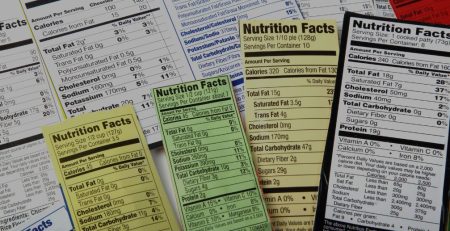
| Information & Regulation | Mandatory inclusion of expiration dates, production codes, net weight, ingredients, nutritional facts, and barcodes (GTIN) for computerized POS systems. | Accelerates inventory management and warehouse scanning efficiency. |
| Logistics & Efficiency | Stackable, space-saving designs compatible with standardized shipping cartons and retail shelf dimensions. | Optimizes transport costs and enhances shelf space efficiency. |
PT. Tetra Jaya Plusindo actively collaborates with farmers and ranchers to elevate their packaging standards. We provide packaging technology transfers—such as vacuum packing or Modified Atmosphere Packaging (MAP) for fresh produce—ensuring that upstream product quality remains uncompromised from the farm gate to the retail consumer.
3. The Art of Price Negotiation with Retail Buyers
Setting a selling price for modern retail requires an intellectual, data-driven approach centered on cost structures, rather than mere intuition. Many producers fall into price wars that erode their net margins.
In executing strategies for penetrating the modern retail market, price negotiations with buyers must adopt a win-win solution framework. Producers must understand that modern retailers require gross margins ranging between 20% to 35% to cover store overheads, employee wages, and marketing campaigns.
Buyers prefer producers who do not merely sell goods but actively contribute to accelerating inventory velocity (high stock turnover).
4. The Ecosystem Synergy of PT. Tetra Jaya Plusindo
Executing these three strategies independently requires significant capital and energy from local producers. Therefore, PT. Tetra Jaya Plusindo serves as a global supply chain aggregator and integrator to streamline the entire process.
+---------------------------+ +---------------------------+ +---------------------------+ | LOCAL PRODUCERS | -----> | PT. TETRA JAYA PLUSINDO | -----> | MODERN RETAIL & | | (Farmers & Ranchers) | | (Strategic Bridge) | | INVESTORS | | Focus on Yield Volume & | | Standardization, QC, & | | Receive Premium Supply, | | Upstream Quality | | Financial Contract Guarantees| | Consistent Stock, & ROI | +---------------------------+ +---------------------------+ +---------------------------+
We ensure that market owners and modern retail networks receive a consistent supply of premium local products through rigorous Quality Control (QC) systems. Simultaneously, for investors, we mitigate the operational risks associated with the agricultural sector by providing a professionally managed, accountable ecosystem rooted in real-time market data.
Conclusion: Elevating Local Products to the Premier Stage
Penetrating the modern retail market is entirely achievable for local products, provided they are backed by the right strategies, structured frameworks, and modern industrial compliance. Transparency in legalities, innovation in packaging, and data-driven price negotiations serve as the main pillars of commercial success.
PT. Tetra Jaya Plusindo is committed to walking hand-in-hand with local farmers and ranchers to premiumize their commodities. We extend an open invitation to retail market owners and institutional investors to build a healthy, sustainable, and mutually lucrative supply chain ecosystem. Together, let us position local products as the pride of every modern retail network. Let’s consult with us, contact PT Tetra Jaya Plusindo now!