Navigating Nature’s Rhythm: Understanding Agricultural Production Cycles for Strategic Business Planning
In the global economic landscape, agribusiness has evolved from a mere commodity sector into a highly valued real asset. However, for investors and business actors outside the agricultural sphere, this sector is often perceived as having a high degree of uncertainty. One of the primary challenges is the “understanding gap” between the fast-paced dynamics of the market and the biological realities in the field, which are inherently bound by time.
PT. Tetra Jaya Plusindo (TJP) serves as a “strategic bridge” to close this gap. As a “guarantor” for investors and a “pathmaker” for producers, we believe that the key to risk mitigation and profit optimization lies in a stakeholder’s ability to comprehend the agricultural production cycle. This article explores how these natural rhythms influence stock availability and how to plan business operations effectively around them.
The Anatomy of a Production Cycle: Beyond Planting and Harvesting
Intellectually, we must view the agricultural production cycle not as a linear path, but as a series of critical phases with biological “lead times” that are non-negotiable. Unlike the machinery manufacturing industry, where production can be accelerated by adding work shifts, agriculture is fundamentally dependent on the physiological processes of plants and animals.
Generally, this cycle is divided into five main stages:
- Pre-Planting & Planning: Land preparation, selection of superior seeds, and soil analysis. Capital commitment begins to lock in during this phase.
- Planting: A window of time heavily influenced by weather. A one-week delay in planting can shift the harvest window by several weeks.
- Maintenance (Vegetative & Generative): The longest phase, where risks from pests, diseases, and climate anomalies are at their highest.
- Harvest: The culmination point where product quality is determined by the precision of the picking time.
- Post-Harvest & Distribution: A critical phase for stock availability, where grading, packaging, and the cold chain determine the product’s shelf life.
Understanding Seasons and Their Impact on Stock Availability
For market owners and modern retailers, stock fluctuation is a persistent concern. Understanding the seasons is no longer just about knowing when it rains, but about comprehending “peak harvests” and “scarcity periods.”
Data suggests that stock instability in the market is often caused not by a lack of total production, but by a lack of synchronization between downstream business planning and the upstream agricultural production cycle.
- Peak Season: Stock is abundant, and prices tend to decrease. Without proper processing or storage planning, “food loss” occurs, which disadvantages the producer.
- Off-Season (Scarcity): Stock thins out, and prices spike. This is where retailers often lose revenue potential due to empty shelves.
PT. Tetra Jaya Plusindo acts as a stabilizer by managing integrated planting calendars across our producer partners, ensuring that stock distribution is more evenly spread throughout the year.
Data-Driven Business Planning for Investors
For investors, understanding these cycles is a form of professional risk management. Agriculture is a “cost-upfront, revenue-backend” business. Below is a comparison table of cycle durations for several strategic commodities, essential for cash flow planning:
| Commodity | Average Cycle Duration | Stock Characteristics | Risk Sensitivity |
|---|---|---|---|
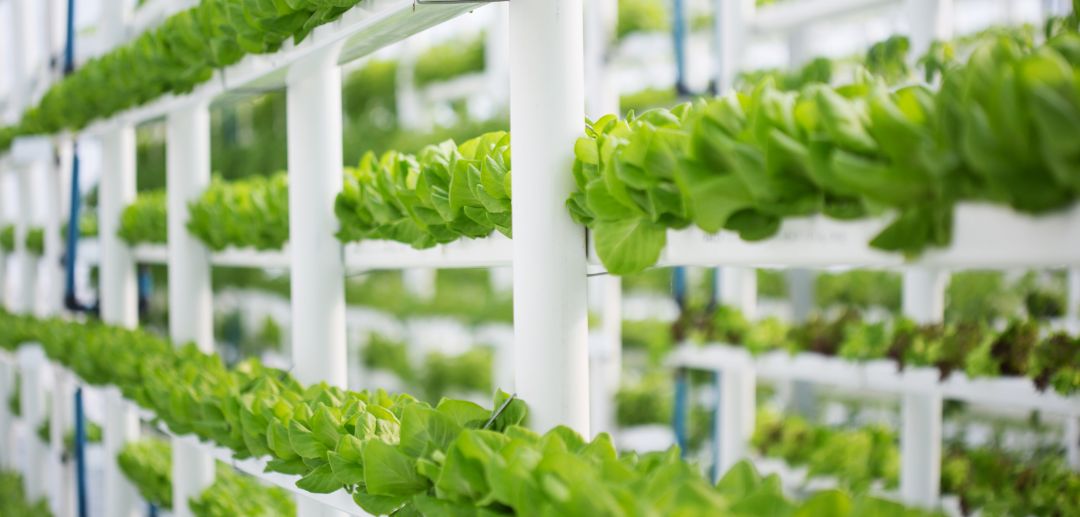
| Horticulture (Vegetables) | 30 – 90 Days | Fast Turnover, Volatile Stock | Very High (Perishable) |
| Food Crops (Rice/Corn) | 100 – 120 Days | Seasonal Stock, Storable | Medium (Pests & Weather) |
| Livestock (Broiler Chicken) | 30 – 35 Days | Very Fast Turnover | High (Disease) |
Investors who understand this data can determine the optimal timing for capital injection and set realistic expectations for dividend timelines. TJP provides this data transparency to ensure every dollar invested has a measurable projection.
TJP’s Role as a “Strategic Bridge”
We recognize that producers (farmers and ranchers) often struggle to align their production rhythms with dynamic market demands. Conversely, market owners often fail to understand why specific product stocks suddenly vanish.
TJP addresses this information asymmetry through two primary approaches:
For Producers: Empowering Our Food Heroes
We act as a “pathmaker” by providing education on professional production cycle management. We support producers in transitioning from traditional patterns to market-driven farming. With TJP’s technology and mentorship, farmers can predict harvest times more accurately, ensuring quality is preserved by the time it reaches the market.
For Investors & Market Owners: Ensuring Sustainability
We act as a “guarantor” by consolidating yields from various producer clusters. If one region faces cycle disruptions due to weather, we compensate with supply from other regions within the TJP ecosystem. This ensures that the global supply chain remains uninterrupted.
Toward a Sustainable Ecosystem
Understanding the agricultural production cycle is the first step toward agribusiness professionalism. This sector is no longer about luck; it is about meticulous planning, precise risk management, and strong synergy between the upstream and downstream.
To our fellow producers: stay resilient in cultivating the earth; we are here to ensure your hard work finds a worthy market. To our investors and market owners: Indonesian agribusiness is a promising field of growth if you have a partner who understands these natural rhythms deeply.
Together with PT. Tetra Jaya Plusindo, let us build a food business ecosystem that is not only financially profitable but also sustainable and rooted in integrity. The future of global food is in the hands of those who dare to understand and respect the cycles of life.



](https://tetrajayaplusindo.co.id/storage/2026/05/Template-Article-Tetra-4-1-450x231.jpg)