Tetra Jaya Plusindo
  • Home
  • Who We Are
  • Our Business
  • Products
  • Cooperate With Us
  • Our Team
  • News
  • Contact Us
  • enEnglish
    • idBahasa Indonesia
  • Home
  • Who We Are
  • Our Business
  • Products
  • Cooperate With Us
  • Our Team
  • News
  • Contact Us
  • enEnglish
    • idBahasa Indonesia
Sourcing Locally with Terindo Group: Shortening Distances, Optimizing Value, and Securing the Future
tetra2026-05-23T10:16:17+00:00

Sourcing Locally with Terindo Group: Shortening Distances, Optimizing Value, and Securing the Future

Have we ever paused to consider the long journey taken by the plate of food served before us? Behind the crispness of the vegetables or the quality of the meat we consume in urban centers lies a supply chain reality that is often ecologically inefficient. On average, urban food supplies travel hundreds, even thousands of kilometers before reaching the consumer.

Every kilometer is more than just a coordinate on a map; every kilometer represents carbon emissions released into the atmosphere. The phenomenon of “Food Miles”—the distance food travels from producer to consumer—has become a significant contributor to the global carbon footprint. However, at PT. Tetra Jaya Plusindo (TJP), as a strategic entity within the Terindo Group, we view this climate challenge not as a deadlock, but as an opportunity for fundamental transformation. Tangible climate solutions can begin with a simple yet high-impact step: shortening the distance between Indonesian farmers and consumers.

The Logistics Reality: The Hidden Costs of Distance

From the perspective of market owners and investors, efficiency is paramount. However, traditional efficiency often neglects “externalities” such as environmental degradation. Excessively long supply chains do not only produce high emissions; they also increase the risk of product quality degradation and inflated logistical costs.

Data indicates that the transportation sector accounts for approximately 14% of global greenhouse gas emissions, with food logistics making up a substantial portion. When a commodity must pass through five to seven intermediary points before reaching retail, the profit margin for producers shrinks, while prices for end consumers skyrocket without any significant added value in quality.

TJP exists to dismantle this obsolete pattern. By serving as a strategic “bridge,” we are building an ecosystem where local resources are optimized to meet domestic and global market needs more intelligently.

Why “Sourcing Locally” is the Intellectual Strategy of the Future

Choosing to source locally is not merely a sentiment of nationalism; it is a business decision rooted in data and rigorous risk management. Through our role as an integrated local distributor, TJP and Terindo Group offer distinct advantages to market owners:

1. Risk Mitigation and Supply Security

Amidst global geopolitical uncertainty and commodity price fluctuations, relying on local sources provides stability. As a local distributor with direct access to producers (farmers and ranchers), we guarantee supply continuity that is more resilient than a dependence on imports, which are vulnerable to international logistical bottlenecks.

2. Cost Efficiency and Emission Reduction

By shortening distribution distances, we drastically reduce fuel costs and the expenses associated with maintaining quality during transit. This aligns with the “green economy” trend, where companies with a low carbon footprint command higher valuations and greater competitiveness in the eyes of global investors.

3. Precision Quality Control

The shorter the supply chain, the easier it is to execute quality control. As a “guarantor” for investors, TJP ensures that quality standards are maintained from the field to the warehouse. We implement rigorous monitoring systems to ensure local products are not just competitive, but superior to international standards.


Paving the Way for Local Producers: Justice in Every Field

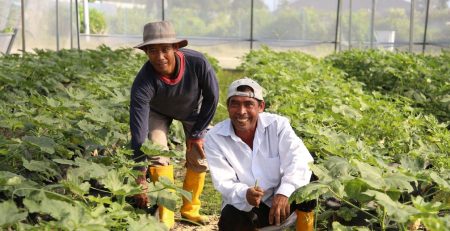
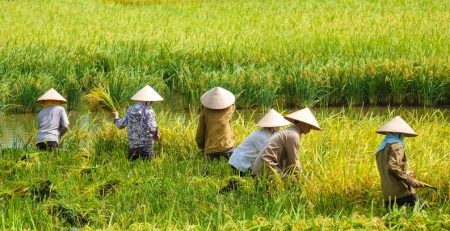
For us at TJP, business success must not leave behind the food heroes on the front lines. Local farmers and ranchers are often marginalized because they lack direct access to modern or international markets. They frequently find themselves trapped in non-transparent middleman systems.

This is where TJP acts as a “pathmaker.” We embrace local producers, bringing them into the Terindo Group ecosystem. The support we provide includes:

  • Market Certainty: We provide guaranteed absorption of harvests at fair and competitive prices.
  • Standardization Mentorship: We assist farmers in elevating their product quality to meet high-end market expectations, thereby increasing their bargaining power.
  • Rural Economic Empowerment: By optimizing our function as a local distributor, we ensure that capital circulation remains within local communities, which in turn fosters social sustainability.

A Bridge to a Greener Future

Sourcing locally through PT. Tetra Jaya Plusindo and Terindo Group is a statement of vision. We are not merely moving goods from one point to another; we are building the future bridge for Indonesian agribusiness. A bridge that connects fertile land to the consumer’s table in the most responsible way possible.

For investors, TJP is the guarantor that your capital is working toward a sustainable future. For producers, TJP is the partner paving the way to broader prosperity. And for all of us, shortening the distance between farmer and consumer is a concrete step to ensure this planet remains habitable for generations to come.

Let us pivot to local sources. Let us build food sovereignty that is independent, efficient, and low-emission. Ultimately, the best climate solutions are often found in our own soil, not far from where we stand.
Share this post

Facebook LinkedIn Email WhatsApp

Related Posts

10 Promising Agribusiness Opportunities Amid the Pandemic

10 Promising Agribusiness Opportunities Amid the Pandemic Have you ever considered venturing into the world of agribusiness? Given the current... read more

Panduan Strategis Memahami Label dan Standar Mutu Produk Pertanian

A Strategic Guide to Understanding Labels and Quality Standards in Agriculture

A Strategic Guide to Understanding Labels and Quality Standards in Agriculture In an increasingly integrated global trade ecosystem, agricultural products... read more

Traces of Transparency from Farm to Fork: Understanding Food Traceability and Its Strategic Imperative

Traces of Transparency from Farm to Fork: Understanding Food Traceability and Its Strategic Imperative

Traces of Transparency from Farm to Fork: Understanding Food Traceability and Its Strategic Imperative In the global economic landscape of... read more

Sustainable Agricultural Business: Harmonizing Nature and Profitability with PT. Tetra Jaya Plusindo

Sustainable Agricultural Business: Harmonizing Nature and Profitability with PT. Tetra Jaya Plusindo

Sustainable Agricultural Business: Harmonizing Nature and Profitability with PT. Tetra Jaya Plusindo Amidst a shifting global economic paradigm, the world... read more

Penetrating the Global Market: Why Transparency and Honesty Are the Foundations of a Successful Business Partnership

Penetrating the Global Market: Why Transparency and Honesty Are the Foundations of a Successful Business Partnership

Penetrating the Global Market: Why Transparency and Honesty Are the Foundations of a Successful Business Partnership In today's fast-paced global... read more

# Farmer Cooperatives: The Pillar of Collective Strength in the Modern Food Supply Chain with PT. Tetra Jaya Plusindo In the global agribusiness landscape of 2026, the greatest challenge facing small-scale producers in Indonesia is not a lack of dedication, but rather fragmentation. Our farmers and ranchers often stand alone, facing volatile market prices and stringent international quality standards without adequate protection. This is where the **farmer cooperative** (*koperasi tani*) emerges—not merely as a social organization, but as a transformative economic engine. **PT. Tetra Jaya Plusindo** (TJP) recognizes that to build a truly sustainable supply chain, we must establish a rock-solid foundation at the upstream level. As a "strategic bridge," TJP views farmer cooperatives as primary strategic partners that unify individual potential into a collective force ready to penetrate global markets. --- ## Understanding the Farmer Cooperative: Beyond a Simple Association Intellectually defined, a **farmer cooperative** is a member-based business entity owned and controlled by farmers to meet shared economic, social, and cultural needs. In a modern context, the cooperative acts as a "center of excellence" that aggregates harvests, standardizes quality, and strengthens bargaining power before large-scale buyers. For PT. Tetra Jaya Plusindo, the presence of cooperatives facilitates our function as a "guarantor" for investors. Investors require certainty regarding volume and quality—an objective that is difficult to achieve when dealing with thousands of farmers individually, but becomes entirely feasible through a single, professional cooperative management gateway. --- ## Strategic Benefits of Joining a Farmer Cooperative For our fellow producers—farmers and ranchers—joining a cooperative is a tactical move to "level up" from being mere land managers to becoming empowered agribusiness players. Key benefits include: ### 1. Economies of Scale Through a cooperative, the procurement of production inputs—such as seeds, fertilizers, and agricultural machinery—can be done collectively. This automatically lowers operational costs for the individual. During the sale phase, large volumes allow the cooperative to negotiate fairer prices than a farmer could achieve independently when dealing with middlemen. ### 2. Access to Technology and Financing A healthy cooperative possesses the legal standing to access bank credit or third-party investment. In its role as a "pathmaker," PT. Tetra Jaya Plusindo can more easily distribute technological assistance—such as IoT sensors or modern irrigation systems—to organized groups within a cooperative framework. ### 3. Quality Standardization and Education Global markets demand certifications and consistent quality. The cooperative acts as an internal quality controller. With mentorship from TJP, the cooperative ensures that every product leaving the hands of its members meets export standards, thereby minimizing the risk of market rejection. --- ## Investor Analysis: Why Farmer Cooperatives Enhance Asset Security For market owners and investors, the **farmer cooperative** is a vital risk mitigation instrument. Investing in conventional agriculture is often perceived as high-risk due to supply chain uncertainties. However, when cooperatives partner with PT. Tetra Jaya Plusindo, these risks can be quantified and professionally managed. | **Risk Parameter** | **Independent Farming (High Risk)** | **Farmer Cooperatives & TJP Ecosystem (Managed Risk)** | | --- | --- | --- | | **Volume Consistency** | Volatile, dependent on individuals | Guaranteed through collective aggregation | | **Standardization** | Difficult to control | Centralized at cooperative processing hubs | | **Traceability** | Weak | Digitally documented | | **ESG Compliance** | Difficult to implement | Integrated into cooperative management | Data indicates that investments channeled through integrated cooperative ecosystems yield a more stable **Return on Investment (ROI)**—averaging 15-20% higher than speculative traditional trade models. --- Joining or forming a cooperative is a commitment to shared growth. Below are the general requirements and steps for producers: --- ## Moving Forward Toward Food Sovereignty The future of Indonesian agribusiness no longer lies in isolated individual struggle, but in organized collective synergy. Let us join forces and collaborate. It is time to prove that by uniting in cooperatives, Indonesian agriculture is not just about survival—it is about leading the global food market. Let's consult with us, contact PT Tetra Jaya Plusindo now!

Farmer Cooperatives: The Pillar of Collective Strength in the Modern Food Supply Chain with PT. Tetra Jaya Plusindo

In the global agribusiness landscape of 2026, the greatest challenge facing small-scale producers in Indonesia is not a lack... read more

Animal Protein Sources in Broiler Chicken: Strategic Insights into Nutritional Value and Health Benefits

Animal Protein Sources in Broiler Chicken: Strategic Insights into Nutritional Value and Health Benefits

Animal Protein Sources in Broiler Chicken: Strategic Insights into Nutritional Value and Health Benefits Animal protein derived from broiler chickens... read more

What is the Agricultural Supply Chain and Why Does it Matter? Decoding the Architecture of Food Security with PT. Tetra Jaya Plusindo

What is the Agricultural Supply Chain and Why Does it Matter? Decoding the Architecture of Food Security with PT. Tetra Jaya Plusindo

What is the Agricultural Supply Chain and Why Does it Matter? Decoding the Architecture of Food Security with PT.... read more

Meeting Rising Market Demand: Cultivating Inthanon and Fujisawa Melons as Superior Agribusiness Commodities

Meeting Rising Market Demand: Cultivating Inthanon and Fujisawa Melons as Superior Agribusiness Commodities

Meeting Rising Market Demand: Cultivating Inthanon and Fujisawa Melons as Superior Agribusiness Commodities The urban shift toward healthier lifestyle choices... read more

Accelerating Local Products: Strategies for Penetrating the Modern Retail Market with PT. Tetra Jaya Plusindo

Accelerating Local Products: Strategies for Penetrating the Modern Retail Market with PT. Tetra Jaya Plusindo

The continuous expansion of the modern retail sector in Indonesia, spanning from supermarket chains to hypermarkets, exhibits a highly... read more

Tags

agrobusiness fruit oystermushroom plant vegetable
Facebook Youtube Instagram Linkedin Tiktok
© copyright 2022. Tetra Jaya Plusindo