Transcending Geographic Boundaries: Market Expansion Strategies for Agricultural Commodities Beyond Java
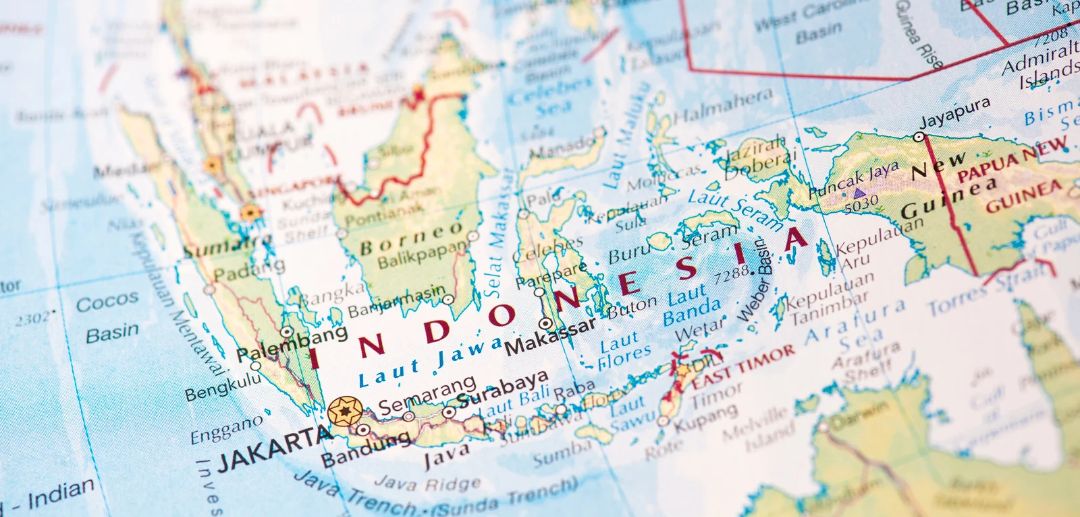
Indonesia’s trade dynamics are undergoing a massive recalibration. The establishment of the Nusantara Capital City (IKN) in Kalimantan alongside intensive industrial downstreaming across Eastern Indonesia has generated vibrant new growth corridors outside Java. This demographic shift has unleashed an unprecedented surge in demand for fresh food supplies and premium agribusiness commodities. In this new commercial reality, market expansion is no longer merely a supplementary growth option, but an essential strategic imperative for modern agriculture.
Navigating the archipelagic expanse of the country, however, is a complex operational undertaking. PT. Tetra Jaya Plusindo (TJP) operates at the center of this dynamic as a “strategic bridge,” orchestrating cross-island supply chains. Acting as an “investment guarantor” for capital owners and a “pathmaker” for our dedicated producers—farmers and ranchers alike—TJP is committed to dismantling logistical bottlenecks so that superior agribusiness products reach every corner of the nation with their quality entirely uncompromised.
The Opportunity Matrix: Why Sumatra, Kalimantan, and Eastern Indonesia?
For market owners and institutional investors, macroeconomic and demographic indicators serve as the primary compass. An empirical analysis reveals compelling fundamentals for market expansion across three strategic regional hubs:
1. Kalimantan: The Centripetal Economic Pull of IKN
Kalimantan has evolved far beyond its traditional identity as a center for oil palm and coal mining. The relocation of hundreds of thousands of civil servants, specialized infrastructure personnel, and corporate executives to IKN and its surrounding feeder hubs (Balikpapan and Samarinda) has catalyzed a burgeoning middle-class consumer demographic.
- Market Dynamics: Surging demand for premium horticultural produce (such as Inthanon melons, bell peppers, and hydroponic greens) and high-grade animal protein. Because Kalimantan’s terrain is heavily dominated by peatlands, local production cannot independently match the accelerating pace of urban consumption.
- The Opportunity: Retail environments in Kalimantan support premium pricing margins that are 25% to 40% higher than those in the saturated, competitive markets of Java.
2. Eastern Indonesia (Sulawesi, Maluku, Papua): The Downstreaming Epicenter
Regional GDP growth across Eastern Indonesia regularly outpaces the national average, propelled by expansive nickel smelter facilities and National Strategic Projects (PSN).
- Market Dynamics: Industrial workers and urban communities possess strong purchasing power, yet the region faces an acute structural deficit in fresh agricultural produce. Fresh fruits and vegetables are frequently treated as luxury goods due to localized supply scarcity.
- The Opportunity: High-volume bulk absorption via institutional B2B channels, including industrial workforce catering contracts and regional supermarket chains. Long-term off-take agreements here provide outstanding price stability.
3. Sumatra: A Maturing, Highly Connected Market
With the Trans-Sumatra Toll Road network connecting key economic centers from Lampung through to Aceh, overland logistical transit times have decreased by up to 50%.
- Market Dynamics: A mature, densely populated market demonstrating steady demand for agricultural staples, spices, and highland fruits that cannot be cultivated efficiently across Sumatra’s lower altitudes.
- The Opportunity: Rapid inventory turnover (fast-moving consumer produce) combined with continuously improving overland freight cost efficiencies.
Deconstructing Inter-Island Logistics: Time and Temperature Over Distance
When executing an inter-island market expansion strategy, linear distance is not the primary adversary—transit time and thermal stability are. For investors navigating this terrain without structured risk mitigation protocols, unmanaged inter-island food transport represents an unacceptably volatile venture.
- Cold Chain Fragmentation: Gaps in cold chain continuity between ports of origin and destination distribution centers trigger thermal shock in fresh commodities, causing post-harvest shrinkage and food loss rates of up to 30% during transit.
- Freight Rate Imbalances (Empty Backhauls): Outbound cargo vessels departing Java often operate at peak capacity, but return largely empty from Eastern ports. This logistical asymmetry inflates outbound freight rates, which must be absorbed by the destination retail price.
- Mechanical Stress on Commodities: Rough maritime conditions and manual stevedoring during port transshipment demand packaging specifications that can withstand extreme physical shock.
TJP’s Market Penetration Architecture: Securing Quality, Unlocking Access
To mitigate these challenges, PT. Tetra Jaya Plusindo eliminates unhedged operational risk for investors while providing total market-access support for producers. Our cross-island logistics architecture rests on three operational pillars:
1. Centralized Volume Aggregation (Hub-and-Spoke Model)
TJP consolidates yields from our partner agricultural clusters across Java into a single, specialized Distribution Hub. By shipping commodities at scale via Full Container Loads (FCL), we significantly reduce freight costs per kilogram, protecting healthy commercial margins for all ecosystem participants.
2. Post-Harvest Standardization and Resilient Eco-Packaging
Serving as a proactive pathmaker, TJP equips producers with post-harvest infrastructure and training. We enforce rapid pre-cooling protocols immediately after harvest to slow plant cellular respiration. Commodities are subsequently packed in reinforced, breathable eco-packaging—such as high-density molded pulp—engineered to absorb vibrational shocks and preserve internal airflow for days inside temperature-controlled reefer containers.
3. Data-Driven Off-Take Contract Management
For capital providers, TJP functions as an investment guarantor, securing project profitability before a shipment ever sets sail. TJP locks in forward off-take agreements with verified regional supermarket networks, industrial catering groups, and tier-one distributors across Sumatra, Kalimantan, and Eastern Indonesia. No inventory is dispatched on speculation; every shipment is strictly aligned with pre-mapped market demand.
Building a Unified National Food Ecosystem
Executing a sustainable market expansion strategy beyond Java is a practical blueprint for national food integration.
To our partner producers: your commercial horizon is no longer restricted by provincial borders. PT. Tetra Jaya Plusindo provides the technology, working capital structures, and multi-modal logistics necessary to ensure that the fruits of your labor reach consumer tables from Aceh to Papua at peak valuation. Focus your expertise on cultivation excellence; our infrastructure will handle maritime logistics and market distribution.
To our investors and market partners: inter-island agribusiness represents a resilient, high-growth real asset class offering compounding returns. Backed by TJP’s transparent operations, stringent risk controls, and integrated distribution network, your investment directly advances national food sovereignty while securing sustainable commercial yields.
Let us cross this ocean of opportunity together and consult with us, contact PT Tetra Jaya Plusindo now!







](https://tetrajayaplusindo.co.id/storage/2026/05/Template-Article-Tetra-4-1-450x231.jpg)