Building the Foundation of the Future: What is Food Security and What Are Its Challenges in Indonesia?
The global community faces an increasingly dynamic economic and ecological landscape. Amid accelerating population growth and shifting climate patterns, discussions surrounding food are no longer confined to volume alone, but rather focus on the resilience of the systems sustaining production. In this reality, the concept of food security has become vital.
For PT. Tetra Jaya Plusindo (TJP), addressing food security challenges in Indonesia goes far beyond analyzing macroeconomic datasets and policy briefs. It is about ensuring that every hectare managed by our producer partners—farmers and ranchers—delivers measurable, optimal yields, while simultaneously offering market owners and investors absolute supply certainty and uncompromising quality. As a “strategic bridge” within the global supply chain, TJP views food security as the cornerstone of an enduring, sustainable agribusiness ecosystem.
The Anatomy of Food Security: Analyzing the Four Core Pillars
The Food and Agriculture Organization (FAO) frames food security around four interdependent pillars. A vulnerability in any single pillar compromises the stability of the entire system. Below is an analytical review of these four pillars within the Indonesian context:
1. Food Availability
This pillar focuses on the aggregate supply side: is sufficient food produced to meet the nutritional needs of the population?
- Challenges in Indonesia: The conversion of arable agricultural land, climate-induced planting cycle shifts, and an aging demographic among rural producers present structural threats to domestic supply. Often, local producers labor without targeted agronomic guidance, leading to sub-optimal crop yields.
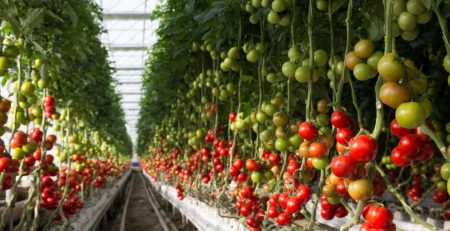
- TJP’s Solution: Operating as a “producer pathmaker,” TJP equips upstream producers with precision agriculture frameworks—such as Controlled Environment Agriculture (CEA) greenhouse infrastructure—and comprehensive soil management protocols. This approach scales productivity within existing footprints, securing continuous, year-round volume.
2. Food Access
Abundant food production is inconsequential if physical and economic barriers prevent communities and commercial networks from accessing it.
- Challenges in Indonesia: The geographical realities of an archipelagic nation inherently elevate domestic freight and logistics costs. Economically, persistent information asymmetry often forces smallholders to liquidate yields at depressed rates to intermediaries during harvest peaks, while retail consumer prices remain artificially inflated.
- TJP’s Solution: As a strategic bridge, TJP rationalizes fragmented supply chains. By consolidating harvests directly at the farm gate and channeling them into modern distribution hubs, we secure equitable margins for producers and price predictability for downstream markets.
3. Food Utilization
The third pillar transitions from caloric volume to biological quality. Utilization concerns how nutritional value is absorbed and maintained, dictated by food safety, sanitization standards, and post-harvest care.
- Challenges in Indonesia: Indiscriminate chemical input usage, inconsistent post-harvest handling, and gaps in cold chain infrastructure lead to significant food loss and rapid nutrient degradation.
- TJP’s Solution: TJP establishes Good Manufacturing Practice (GMP) protocols and digital traceability systems across its partner network. We guide producers to comply with international Maximum Residue Limits (MRL), ensuring produce is clean, safe, and ready to meet the exacting standards of modern retail and export destinations.
4. Food Stability
Stability introduces the temporal dimension to the preceding three pillars. True food security requires that availability, access, and utilization remain constant across time, resilient against economic shocks and climatic anomalies.
- Challenges in Indonesia: Marked seasonal variations frequently trigger cyclical supply shortages (paceklik), driving localized food price inflation and inventory deficits.
- TJP’s Solution: Through centralized, data-driven planting schedules, TJP regulates agricultural production rhythms across regional producer clusters. This mitigates harvest volatility and ensures that supply commitments to partner markets remain uncompromised throughout the calendar year.
Data Analysis for Investors: Food Security as a Resilient Business Opportunity
For institutional investors and commercial market operators, understanding food security dynamics in Indonesia provides a clear window into high-value opportunities. When engineered to resolve systemic bottlenecks across these four pillars, agribusiness ceases to be a speculative gamble and becomes a robust, defensive real-asset class.
The matrix below contrasts conventional supply chain vulnerabilities with TJP’s integrated operational model:
| Risk Dimension (Food Security Pillars) | Conventional Supply Chain Model | PT. Tetra Jaya Plusindo Ecosystem | Impact on Investment (ROI) |
|---|---|---|---|
| Availability | Vulnerable to crop loss (weather/pests) | Scheduled & supervised by agronomists | Guaranteed input volume & raw material continuity |
| Access & Logistics | Fragmented, protracted distribution costs | Direct-to-market consolidated logistics | Optimized margins & minimized transit loss |
| Utilization (Quality) | Variable grading, residue exposure risks | Standardized protocols (GMP & Traceability) | Premium market pricing & reduced rejection rates |
| Stability | Extreme price volatility & stockouts | Structured off-take agreements & stable pricing | High cash-flow predictability & capital security |
This structured approach reflects TJP’s operational mandate as an “investment guarantor.” By neutralizing structural vulnerabilities upstream, we insulate commercial capital from preventable operational friction.
Empowering Producers, Delivering Certainty to Markets
Resolving food security cannot occur from executive boardrooms alone. Lasting solutions are forged on the ground, through the dedicated craftsmanship of local farmers and livestock breeders.
To our partner producers: PT. Tetra Jaya Plusindo is committed to ensuring you never navigate field volatility in isolation. Climate pressures and price fluctuations should not be burdens shouldered by growers alone. Our collaborative ecosystem provides technical agronomy, working capital structures, and direct commercial channels so that your labor receives the dignified compensation it deserves.
To our investors and market partners: global food challenges represent a manageable landscape when paired with systematic, data-backed execution. Aligning your capital with TJP’s ecosystem directly reinforces national food infrastructure while securing measurable, long-term returns in a resilient economic sector.
Conclusion: Partnerships Toward Food Sovereignty
Achieving sustainable food security in Indonesia is both a shared imperative and a generational market opportunity. Availability, access, utilization, and stability can only be realized through strategic alignments that connect upstream productivity with downstream demand equitably.
PT. Tetra Jaya Plusindo serves as that bridge. By integrating local producer knowledge, disciplined capital, and modern agronomic science, we are actively constructing a food system that is sovereign, commercially viable, and globally competitive.
Let’s consult with us, contact PT Tetra Jaya Plusindo now!



](https://tetrajayaplusindo.co.id/storage/2026/05/Template-Article-Tetra-4-1-450x231.jpg)