


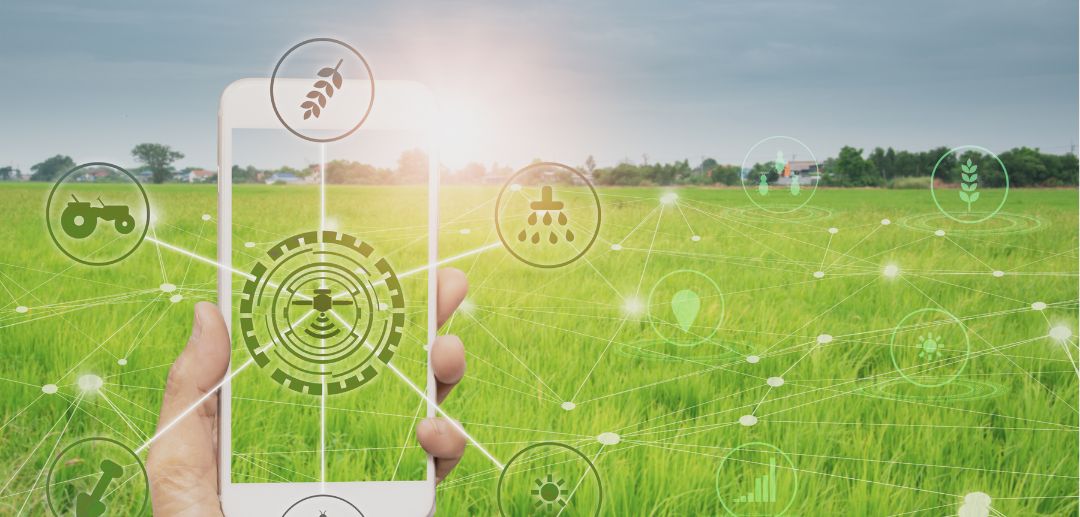
Traces of Transparency from Farm to Fork: Understanding Food Traceability and Its Strategic Imperative
In the global economic landscape of 2026, consumer trust is no longer merely a brand ornament; it is the bedrock of business continuity. Today’s consumers are asking far more than just “What is the price?” or “How does it taste?” They are demanding to know “Where did this come from?” and “How was it produced?” Amidst this escalating demand for transparency, traceability has emerged as the vital instrument that distinguishes credible market leaders from conventional players.
PT. Tetra Jaya Plusindo (TJP) operates at the heart of this dynamic as a “strategic bridge,” committed to building a sustainable business ecosystem. In our roles as an “investment guarantor” for capital owners and a “pathmaker” for producers such as farmers and ranchers, we recognize that traceability is not merely an administrative hurdle—it is the key to elevating the bargaining power of local products on the global stage.
What is Traceability? Connecting the Field to the Table
Intellectually defined, traceability in the food industry is the ability to track the history, application, or location of a product through documented records throughout the entire production chain. This article reviews product tracking systems from the farm to the dinner table and examines why modern retail considers them a mandatory requirement.
In an ideal system, every grain of rice, every cut of meat, or every stalk of vegetable possesses a “digital identity.” This identity records crucial data points, including:
- Upstream (The Farm/Ranch): Seed varieties, planting schedules, fertilizer application, and livestock health history.
- Process (Processing): Harvest timing, storage temperatures, and specific processing plant details.
- Downstream (Logistics & Distribution): Shipping duration, transit routes, and the final journey to the consumer.
For PT. Tetra Jaya Plusindo, this system acts as the bridge that ensures the quality generated by the producer maintains its integrity until it reaches the consumer’s table.
Why Do Modern Retail and Global Markets Demand Traceability?
For market owners and investors, data is the ultimate currency. Modern retail—encompassing supermarkets, hypermarkets, and global e-grocery platforms—now enforces stringent traceability standards. The rationale is rooted in rigorous data analysis:
1. Food Safety Risk Mitigation
Data indicates that product recalls due to food contamination can lead to massive financial losses and permanent reputational damage. With a robust traceability system, if an issue is identified in a specific product lot, companies can swiftly isolate that lot without having to withdraw the entire market stock. This level of risk management efficiency is highly valued by investors.
2. Meeting the “Pro-Transparency” Consumer Expectation
Market research in 2026 shows that over 70% of modern retail consumers are willing to pay a premium price (a margin 10–20% higher) for products with clear traceability labels. Consumers want the assurance that their food is produced without labor exploitation and without damaging the environment.
3. Compliance with ESG Regulations
Large-scale investors are prioritizing portfolios that meet Environmental, Social, and Governance (ESG) standards. Traceability provides the empirical data necessary to prove a product originates from a sustainable ecosystem, facilitating easier ESG audits and increasing a company’s valuation in the eyes of shareholders.
Comparative Analysis: The Impact of Traceability on Product Value
To provide a clearer data-driven perspective for market owners, the following table compares conventional supply chains with traceability-based ecosystems:
| Evaluation Metric | Conventional Supply Chain | Traceable Ecosystem (TJP Model) |
|---|---|---|
| Retail Selling Price | Standard Commodity Price | Premium Price (High Value) |
| Issue Resolution Speed | Slow & Speculative | Rapid & Precise (Real-time) |
| Investor Confidence | Low (High risk) | High (Data-driven) |
| Market Access | Limited to traditional markets | Open to global exports & modern retail |
| Producer Welfare | Dependent on volatile prices | Stable & Sustainable |
The Role of PT. Tetra Jaya Plusindo: A Pathmaker for Local Producers
We understand that for small-scale farmers and ranchers, implementing a technological traceability system can feel intimidating and cost-prohibitive. This is where TJP’s role as a “pathmaker” becomes essential. We do not merely demand standards; we provide the necessary support:
- Human-Centric Digitalization: We assist local producers in recording their production data through simple yet effective systems, making their products “retail-ready” for modern markets.
- Quality Assurance: Through our managed traceability systems, we guarantee to buyers that products from our partner farmers meet international quality benchmarks.
- Supportive Partnership: TJP views farmers not merely as suppliers, but as strategic partners. By helping them implement traceability, we are effectively securing their economic future against the pressures of global competition.
Traceability as an “Investment Guarantor” Instrument
For you, the investors, PT. Tetra Jaya Plusindo positions traceability as an investment guarantee instrument. Uncertainty in the agricultural supply chain has long been a deterrent. However, with transparency from the field to the table, every dollar you invest carries a clear digital footprint.
Traceability reduces “information asymmetry” between field operations and financial reporting. The result? Safer investments, measurable returns, and the pride of being part of an ethical global food solution.
Conclusion: The Future is Transparency
The food industry in 2026 is no longer defined by who produces the most, but by who is the most honest in their production. Traceability is the new language of international trade.
PT. Tetra Jaya Plusindo is committed to serving as your resilient bridge. We invite market owners to trust their supply chains to our system, investors to grow alongside our ecosystem, and farmers to take a bold step toward a new era of professionalism.
Let us build a future where every meal on the table tells a story of kindness, honesty, and preserved quality. Together with PT. Tetra Jaya Plusindo, we realize food sovereignty that is both transparent and sustainable. Let’s consult with us, contact PT Tetra Jaya Plusindo now!





](https://tetrajayaplusindo.co.id/storage/2026/05/Template-Article-Tetra-4-1-450x231.jpg)