Tetra Jaya Plusindo
  • Home
  • Who We Are
  • Our Business
  • Products
  • Cooperate With Us
  • Our Team
  • News
  • Contact Us
  • enEnglish
    • idBahasa Indonesia
  • Home
  • Who We Are
  • Our Business
  • Products
  • Cooperate With Us
  • Our Team
  • News
  • Contact Us
  • enEnglish
    • idBahasa Indonesia
Essential 2026 Indonesian Agribusiness Trends: Navigating Green and Digital Ecosystems with PT. Tetra Jaya Plusindo
tetra2026-06-03T07:23:17+00:00

Essential 2026 Indonesian Agribusiness Trends: Navigating Green and Digital Ecosystems with PT. Tetra Jaya Plusindo

The year 2026, the face of Indonesia’s agricultural sector has undergone a fundamental transformation. No longer viewed as a traditional, subsistence-based industry, agriculture has evolved into a high-tech, sustainable economic engine. The dynamics of the global market now demand transparency, uncompromising quality, and tangible environmental responsibility.

PT. Tetra Jaya Plusindo (TJP) stands at the heart of this shift as a “strategic bridge,” ensuring that the vast potential of local producers—our farmers and ranchers—aligns perfectly with the expectations of international investors and market owners. Understanding the agribusiness trends of 2026 is the key to transforming challenges into sustainable profitability. Here is a summary of the primary trends dominating the agribusiness landscape this year.

Digitalization and Precision Farming: Data-Driven Efficiency

The year 2026 marks the tipping point where digitalization is no longer an “added value” but a standard operational requirement. Precision Agriculture now holds the reins in increasing yields while simultaneously driving down operational costs.

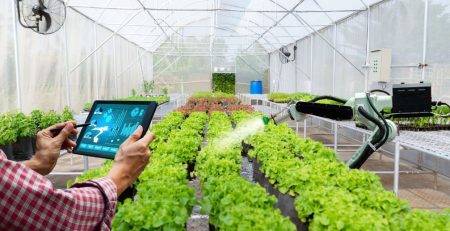
The use of the Internet of Things (IoT) for real-time soil nutrient monitoring, drones for land mapping, and AI for micro-climate forecasting has helped producers minimize harvest failures. For market owners and investors, this digitalization provides something invaluable: Data Transparency. Investors can now monitor production footprints digitally, which directly mitigates the risks of uncertainty. TJP acts as a guarantor, ensuring this technological integration reaches the producer level so that the quality of products entering the supply chain remains consistent and measurable.

Surging Demand for Organic and Functional Foods

Global consumer health consciousness has reached its peak in 2026. Organic products are no longer considered luxury items for a niche audience; they are now a staple for the discerning urban population. Furthermore, functional foods—products that provide health benefits beyond basic nutrition—are experiencing double-digit growth in demand.

Product CategoryProjected 2026 GrowthPrimary Drivers
Organic Fruits & Veg15% – 20%Heightened health-conscious lifestyles.
Free-Range Livestock12%Animal welfare and ethical sourcing.
Premium Spices18%Demand in global pharma and culinary industries.

PT. Tetra Jaya Plusindo anticipates this shift by facilitating local producers in obtaining international organic certifications. We pave the way for traditional farmers to transition to more profitable methods, ensuring their products hold high competitive value in premium markets.

Green Supply Chains and ESG Implementation

The most defining trend of 2026 is the implementation of the Green Supply Chain. Global markets, particularly in Europe and North America, have enacted strict regulations regarding the carbon footprint of agribusiness products. Every kilometer a product travels and every liter of water used must be accounted for through ESG (Environmental, Social, and Governance) reporting.

Modern agribusiness logistics now focuses on:

  • Reducing Food Loss: Utilizing energy-efficient cold chain technology.
  • Local Sourcing: Shortening the distance between producers and distribution hubs to slash carbon emissions.
  • Biodegradable Packaging: Replacing single-use plastics with starch-based or plant-fiber materials.

PT. Tetra Jaya Plusindo is fully committed to developing a sustainable ecosystem. We believe that protecting the planet goes hand-in-hand with protecting profits. Investors partnering with TJP gain more than just financial returns; they gain a measurable contribution to environmental preservation.

Welcoming the Future through Synergy

Indonesian agribusiness trends in 2026 offer great optimism for those ready to adapt. This new era demands closer collaboration between capital, technology, and dedication in the field. PT. Tetra Jaya Plusindo invites all stakeholders—market owners, investors, farmers, and ranchers—to move forward together.

The future of food is not just about feeding the world; it is about providing quality, health, and sustainability. Together with PT. Tetra Jaya Plusindo, let us build a bridge toward a more resilient, intelligent, and integrity-driven Indonesian agribusiness prosperity.

Share this post

Facebook LinkedIn Email WhatsApp

Related Posts

Elevation and Competitive Advantage: Why Altitudes Determine the Success of Planting Commodities

Elevation and Competitive Advantage: Why Altitudes Determine the Success of Planting Commodities

Elevation and Competitive Advantage: Why Altitudes Determine the Success of Planting Commodities In an increasingly competitive global supply chain, food... read more

10 Promising Agribusiness Opportunities Amid the Pandemic

10 Promising Agribusiness Opportunities Amid the Pandemic Have you ever considered venturing into the world of agribusiness? Given the current... read more

Animal Protein Sources in Broiler Chicken: Strategic Insights into Nutritional Value and Health Benefits

Animal Protein Sources in Broiler Chicken: Strategic Insights into Nutritional Value and Health Benefits

Animal Protein Sources in Broiler Chicken: Strategic Insights into Nutritional Value and Health Benefits Animal protein derived from broiler chickens... read more

Sourcing Locally with Terindo Group: Shortening Distances, Optimizing Value, and Securing the Future

Sourcing Locally with Terindo Group: Shortening Distances, Optimizing Value, and Securing the Future

Sourcing Locally with Terindo Group: Shortening Distances, Optimizing Value, and Securing the Future Have we ever paused to consider the... read more

Establishing the Gold Standard of Food: Understanding GMP (Good Manufacturing Practice) and Its Urgency in the Agribusiness Ecosystem

Establishing the Gold Standard of Food: Understanding GMP (Good Manufacturing Practice) and Its Urgency in the Agribusiness Ecosystem

Establishing the Gold Standard of Food: Understanding GMP (Good Manufacturing Practice) and Its Urgency in the Agribusiness Ecosystem In the... read more

A Guide to Farmer-Corporate Partnerships: Cultivating Mutual Success in a Sustainable Ecosystem

A Guide to Farmer-Corporate Partnerships: Cultivating Mutual Success in a Sustainable Ecosystem

A Guide to Farmer-Corporate Partnerships: Cultivating Mutual Success in a Sustainable Ecosystem In the face of an increasingly volatile global... read more

What is Business Bridging and Why is it Crucial for MSMEs? Transforming Supply Chains with PT. Tetra Jaya Plusindo

What is Business Bridging and Why is it Crucial for MSMEs? Transforming Supply Chains with PT. Tetra Jaya Plusindo

What is Business Bridging and Why is it Crucial for MSMEs? Transforming Supply Chains with PT. Tetra Jaya Plusindo In... read more

Strategies for Building a Sustainable Business Network: A Modern Agribusiness Perspective

Strategies for Building a Sustainable Business Network: A Modern Agribusiness Perspective

Strategies for Building a Sustainable Business Network: A Modern Agribusiness Perspective In today’s global economic landscape, the paradigm of corporate... read more

The Urgency of Quality Control and Standardization in Indonesian Agriculture

The Urgency of Quality Control and Standardization in Indonesian Agriculture

The Urgency of Quality Control and Standardization in Indonesian Agriculture In today’s global economic landscape, the agribusiness sector is no... read more

# **Bird’s Eye Chili: A Premier Commodity in Indonesia’s Supply Chain** In the landscape of Indonesian food commodities, a unique and recurring phenomenon has caught the serious attention of policymakers, market players, and households alike: the price dynamics of Bird’s Eye Chili. Consistently, the price of red Bird’s Eye Chili per kilogram often exceeds that of other basic staples, such as rice, sugar, or even poultry, during specific periods ### **Why Does This "Small" Commodity Command Such a High Price?** When compared head-to-head, the price of red Bird’s Eye Chili often reaches figures far above the average price of premium rice or shallots**Bird’s Eye Chili**. Several factors contribute to this high valuation: - **Significant Production Risks**: Unlike more resilient food crops, Bird’s Eye Chili is highly vulnerable to weather anomalies and pest infestations. A harvest failure in a single season can drastically slash national supply in a short time. - **Perishability**: Its short shelf life demands highly efficient logistical management. Every hour of delay in distribution results in a decline in quality and market value. - **Inelastic Demand**: In Indonesia, Bird’s Eye Chili is more than just a garnish; it is a cultural necessity. High demand, when not met with supply stability, creates extreme price volatility. ### **The Role of PT Tetra Jaya Plusindo: Bridging the Gap Between Upstream and Downstream** PT Tetra Jaya Plusindo understands that to keep Bird’s Eye Chili prices competitive for consumers while remaining profitable for farmers, a smarter and more transparent supply chain system is required As a pathfinder for producers—especially chili farmers across various regions—we are committed to ensuring their products are fairly valued and meet quality standards capable of penetrating wider markets. 1. **Standardization and Quality Control**: We assist farmers in implementing strict Quality Control protocols from planting to post-harvest. Maintaining quality ensures the produced Bird’s Eye Chili has higher competitiveness among large retailers and the food processing industry. This minimizes harvest waste caused by products failing to meet market specifications. 2. **Logistical and Supply Chain Efficiency**: PT Tetra Jaya Plusindo acts as an integrator that eliminates supply chain inefficiencies. Through shorter and more organized distribution channels, we ensure product freshness is maintained while logistical costs are reduced. ### **Investor Perspective: Ensuring "On Track" Investments** For investors and landowners, food commodities like Bird’s Eye Chili offer stable growth prospects alongside increasing population and consumption. However, investing in this sector requires an entity that understands field-level risk mitigation. We believe secure investments are those that provide a real impact on food security and producer welfare. By utilizing accurate market data and extensive networks, we help business partners make decisions based on in-depth analysis rather than mere price speculation. By making Bird’s Eye Chili a focus commodity, we aim to help society thrive together, creating efficiency while preserving natural resources for future generations. Let us build a supply chain that is not only financially profitable but also socially impactful. Whether you own idle land or wish to enter agribusiness without owning land, [consult with us today.](http://wa.me/6281517748865)

Bird’s Eye Chili: A Premier Commodity in Indonesia’s Supply Chain

Bird’s Eye Chili: A Premier Commodity in Indonesia’s Supply Chain In the landscape of Indonesian food commodities, a unique and... read more

Tags

agrobusiness fruit oystermushroom plant vegetable
Facebook Youtube Instagram Linkedin Tiktok
© copyright 2022. Tetra Jaya Plusindo